Wedding
North Indian Wedding Rituals: Baraat, Milni, Varmala, Pheras & the Venue Space They Need
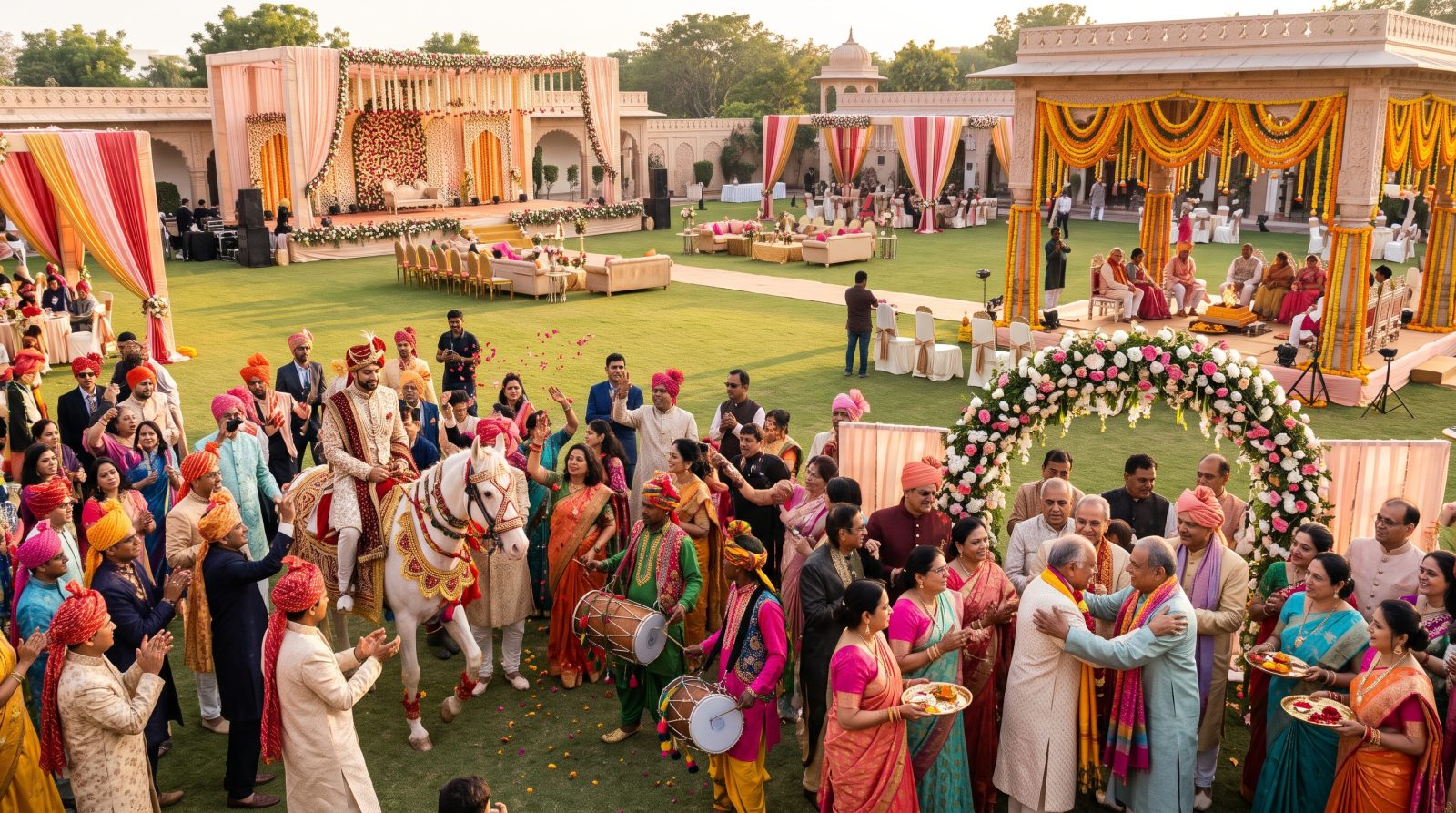
A North Indian wedding is a chain of rituals, and each one uses a different part of the venue. The baraat needs the gate and the road outside. Milni needs the entrance. Varmala needs the stage. The pheras need a mandap with a live fire. Couples who book a hall on guest count alone often find out on the day that the baraat has nowhere to dance, or that the mandap sits too close to the dining area.
Here is the short answer. A baraat needs an open approach and parking for a procession. Milni needs a clear forecourt where two families can stand facing each other. Varmala needs a raised, sturdy stage with good sightlines. The pheras need ventilation, fire safety clearance and a start time the venue can honour. The sections below cover what happens in each ritual and the space it asks for.
What Is a Baraat and How Much Space Does It Need?
The baraat is the groom's wedding procession. Family and friends gather at a nearby point, then walk or dance to the venue behind a dhol or band, with the groom on a decorated horse, in a vehicle or on foot. It usually runs 30 to 60 minutes and is the loudest part of the day.
The venue needs a staging area close to the gate, a clear stretch leading to the entrance, and enough parking for the groom's side to arrive together. Sound is the other limit. Ask whether the venue allows a live dhol or a DJ vehicle at the gate, and check the local rules on loudspeakers and crackers before you build the schedule around them.
What Happens During Milni?
Milni is the formal meeting of the two families at the entrance, right after the baraat arrives. Counterparts greet each other, so the fathers exchange garlands first, then uncles, brothers and other relatives, often with gifts, a tilak and an aarti for the groom. It takes 20 to 30 minutes.
It looks small, but it needs real room. Both families, roughly 60 to 100 people in total, stand facing each other with the priest and photographers in between. A covered porch or forecourt helps, because Bangalore rain does not wait for the muhurat.
What Is Varmala and Why Does the Stage Matter?
Varmala, also called Jaimala, is the exchange of flower garlands between the bride and groom on the stage. Guests wait for this moment, and in many families the cousins and friends of both sides playfully lift the couple or hold them back. It runs 15 to 20 minutes, including the bride's entry.
This ritual decides your stage design. The stage should be sturdy enough for several people at once, with a front wide enough for the couple and their parents. The bride's entry needs a clear aisle under a floral canopy. A stage tucked into a corner looks fine on a floor plan and bad on video.
What Are the Pheras and Can They Happen Indoors?
The pheras are the heart of the wedding. The couple walk around the sacred fire seven times, one vow for each round, while the priest recites mantras. The full ritual runs one to two hours, and in many families it happens late at night, as per the muhurat.
Two practical questions come up. The first is the fire. A havan kund burns real flame and produces smoke, so the mandap needs ventilation and the venue's fire safety approval. Some halls allow it only in open or semi-open areas, so ask before you pay the advance. The second is timing. If your muhurat falls after 10 PM, check the venue's closing and sound rules, since night-time noise limits generally apply and the priest's microphone counts. Seat 30 to 50 close family members around the mandap, and keep the dining area well away from it.
What About Roka, Sagai and Other Pre-Wedding Functions?
Many North Indian families hold smaller functions before the wedding day, such as roka, sagai and tilak, where the two families formally agree to the match and exchange gifts or rings. These usually host 40 to 100 guests, with no procession and no fire. A full banquet hall is more than they need, and the room feels empty. This is where mini halls for engagement in Bangalore make sense, since a compact hall keeps the cost down and the photographs full.
Do All North Indian Families Follow the Same Order?
No. North India covers Punjabi, Marwari, Bihari, Uttar Pradeshi and many other communities, and each one adds its own steps. Some families tie the sehra on the groom before he leaves for the baraat. Others add a toran ritual at the bride's door, or a long round of games after varmala. Sikh weddings follow the Anand Karaj, where the couple walk around the Guru Granth Sahib four times, usually in a gurdwara, so the pheras section above does not apply to them. Before you plan the space, ask both families which rituals they will actually perform and in what order. One extra ritual can change the layout. Once that list is settled, shortlist wedding places in Bangalore against it instead of against guest count alone. A hall with a wide forecourt suits a long baraat, while a compact one with a good stage can work for a shorter ceremony.
What Does a Typical Wedding Evening Look Like Hour by Hour?
The muhurat sets the real times, but a common evening wedding in Bangalore might run like this. The groom's side gathers for the baraat around 6:30 PM and reaches the venue by 7:00. Milni follows at about 7:15. Varmala happens around 8:00, and dinner opens at 8:30 so guests can eat while the families prepare for the pheras. The pheras begin at the muhurat, which may be 10:30 PM or well past midnight, and the bride's farewell, called vidaai, closes the night.
What matters for the venue is the long gap between varmala and the pheras. During those hours the hall has to run the dining area, the mandap and the stage at the same time.
How Do You Match These Rituals to a Venue?
Walk the venue in the order the rituals happen. Start at the gate and ask where the baraat gathers and where the cars go. Look at the stage from the back row. Find where the mandap would sit and where the smoke would go. Then compare the closing time with your muhurat.
If the wedding and the reception fall on the same evening, treat the second event as its own decision. When you compare wedding reception venues, ask how long the hall needs to change from mandap to stage and dining, because a long gap means guests waiting hungry while the staff reset the room. Ask for the hall dimensions in feet and a floor plan instead of relying on a capacity number alone.
How Should Guests and Family Move Through the Venue?
Think of three groups: the bride's family, the groom's family, and the guests who are only there for the evening. The baraat party arrives together and needs a place to wait before milni. The bride's family needs a clear path from the bridal room to the stage for the varmala entry. Elders need seats close to the mandap, with a walkway left open for the priest and the couple.
The most common problem is one narrow passage that the baraat, the bride's entry and the dining queue all use at once. Walk that passage with the venue manager and ask where each group will be standing at 8 PM.
What Should You Ask a Venue Before Booking?
Take a short list to the site visit. Ask for the hall's length and width in feet, not just the seating capacity. Ask where the mandap can go and whether a havan is allowed there. Ask where the baraat can gather, how many cars the parking holds, and whether the gate area can be kept clear for the procession.
Ask for the closing time, and what happens if the pheras run past it. Ask about rooms too. The groom's side needs a room to get ready before the baraat, and the bride needs a quiet room close to the stage before her entry.
Frequently Asked Questions
What is the order of North Indian wedding rituals?
The usual order is baraat, milni, varmala and pheras, followed by the bride's farewell, called vidaai. The exact order varies by family and region.
How long do the main North Indian wedding rituals take?
The baraat runs 30 to 60 minutes, milni 20 to 30 minutes, varmala 15 to 20 minutes and the pheras one to two hours. Together that is roughly two to four hours, not counting meals and photographs.
Can the pheras be held in an indoor hall?
Often yes, but it depends on ventilation and the venue's fire safety rules for open flame. Confirm the permission with the venue in writing before booking.
Does a baraat need space separate from the main hall?
Yes. It needs a forecourt or driveway near the entrance, because it involves music, dancing and sometimes a horse.
Does a Sikh wedding include pheras?
No. Sikh weddings follow the Anand Karaj, where the couple circle the Guru Granth Sahib four times, called laavan. Many families hold the ceremony in a gurdwara, so confirm that a hall can host it before booking.