Wedding
South Indian Wedding Rituals: Kashi Yatra, Oonjal, Mangalsutra Dharanam & What Your Kalyana Mantapa Must Provide
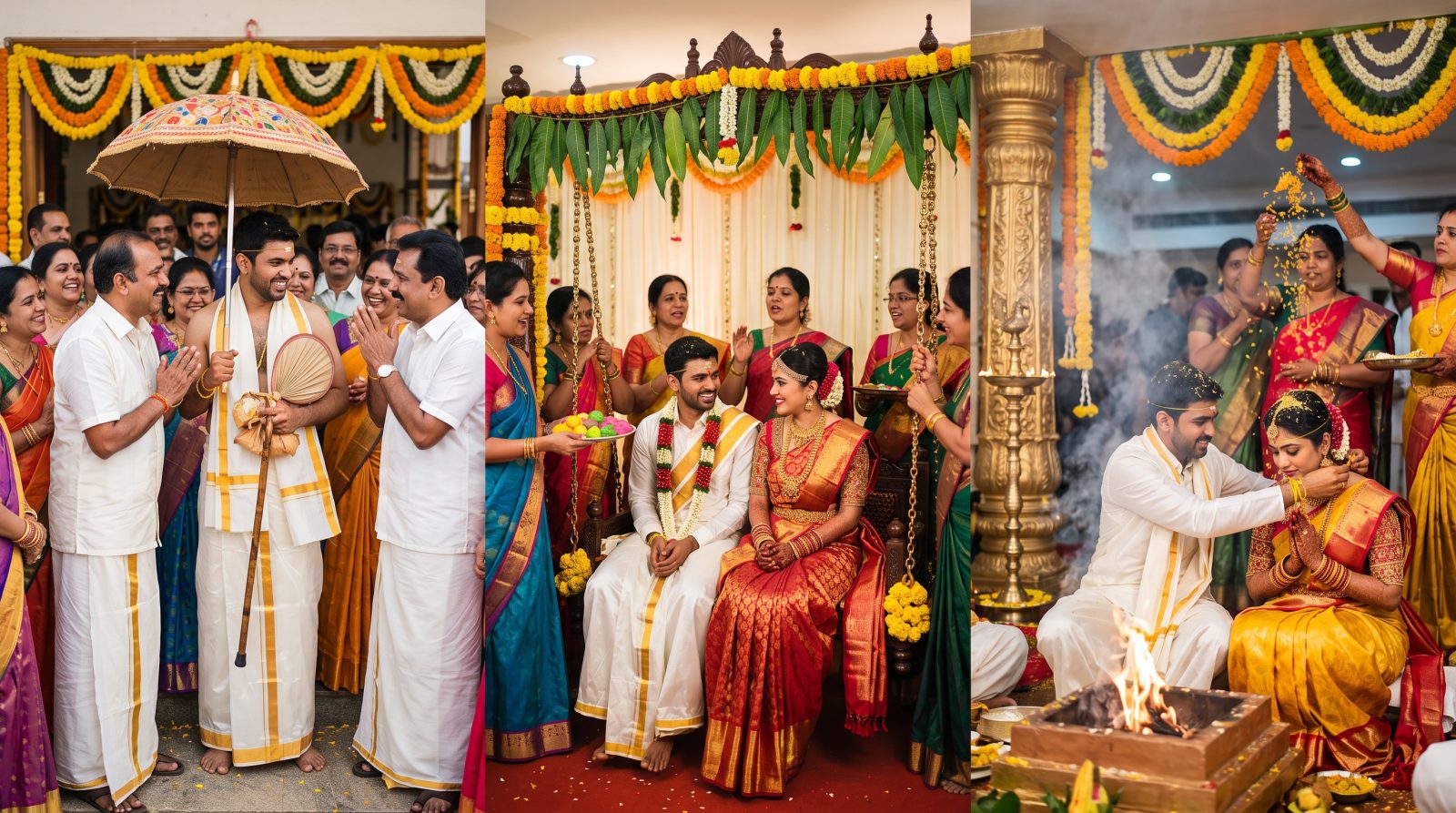
In a traditional South Indian wedding, the morning follows a set order: Kashi Yatra, the garland exchange, Oonjal, Kanyadaanam, then Mangalsutra Dharanam at the muhurtham, and finally Saptapadi. Each ritual asks something different of the venue. Kashi Yatra needs a clear walkway, Oonjal needs a safe swing with room around it, and the mangalsutra moment needs a stage every guest can see, music that carries, and a hall that opens well before sunrise.
Here is what happens in each ritual, and what to confirm before you pay an advance on a kalyana mantapa.
What is Kashi Yatra in a South Indian wedding?
Kashi Yatra is a mock pilgrimage. The groom announces he is leaving for Kashi (Varanasi) to live a life of study and renunciation, and the bride's father stops him on the way and persuades him to marry his daughter instead.
It is most common in Tamil, Telugu and Kannada Brahmin weddings, and it is played for laughs. The groom sets off in new slippers with an umbrella, a hand fan, a walking stick and a sacred book. In many Telugu and Kannada families, the bride's brother does the persuading.
The idea underneath is serious. Marriage is the move from student life (brahmacharya) into the householder stage (grihastha), and Kashi Yatra lets the groom make that choice in front of everyone.
What happens during the Oonjal ceremony?
Oonjal is the swing ceremony. The bride and groom sit side by side on a decorated swing while married women from both families sing oonjal songs and rock it gently.t
It follows Maalai Maatral, where the couple exchange garlands three times while perched on their uncles' shoulders. On the swing, the women feed the couple milk and banana, wash their feet with milk, and circle them with coloured rice balls that are thrown away to ward off the evil eye.
The swing is the message. Married life will move back and forth, and the couple are meant to stay steady through it together.
What is Mangalsutra Dharanam, and why is it the main ritual?
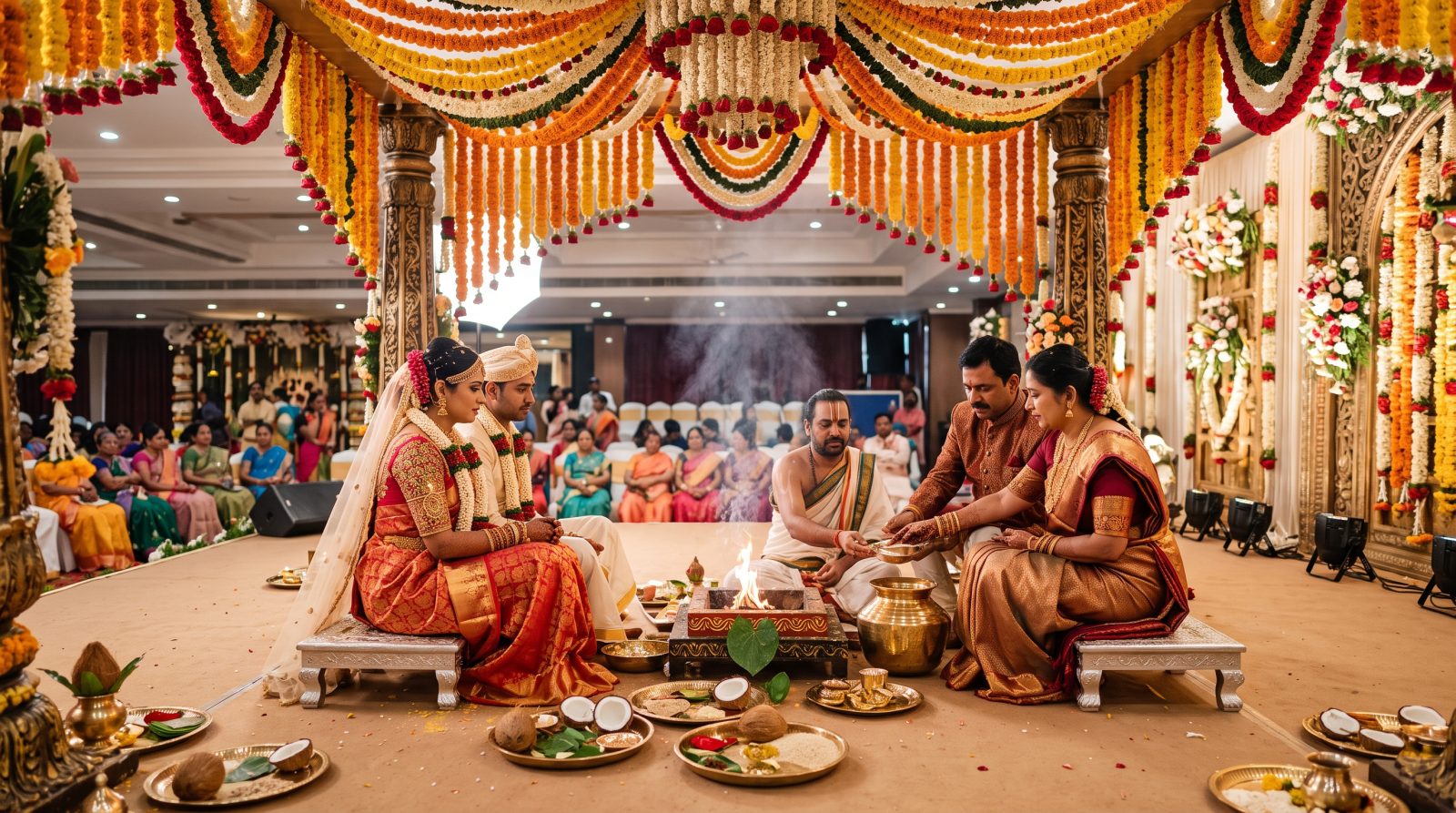
Mangalsutra Dharanam, also called Mangalya Dharanam or thali kattu in Tamil, is the moment the groom ties the sacred thread or chain around the bride's neck at the exact muhurtham fixed from both horoscopes. For most South Indian families, this is when the couple are married.
It comes after Kanyadaanam, when the bride's father places her hand in the groom's, and after the bride changes into the saree gifted by the groom's family, the koorai pudavai in Tamil homes. The groom ties three knots, and in many Tamil families his sister ties the second and third. The nadaswaram and drums break into the getti melam to drown out any inauspicious sound, while guests shower the couple with akshatai, rice mixed with turmeric.
Saptapadi, the seven steps around the sacred fire, follows and completes the ceremony.
What must your kalyana mantapa provide for these rituals?
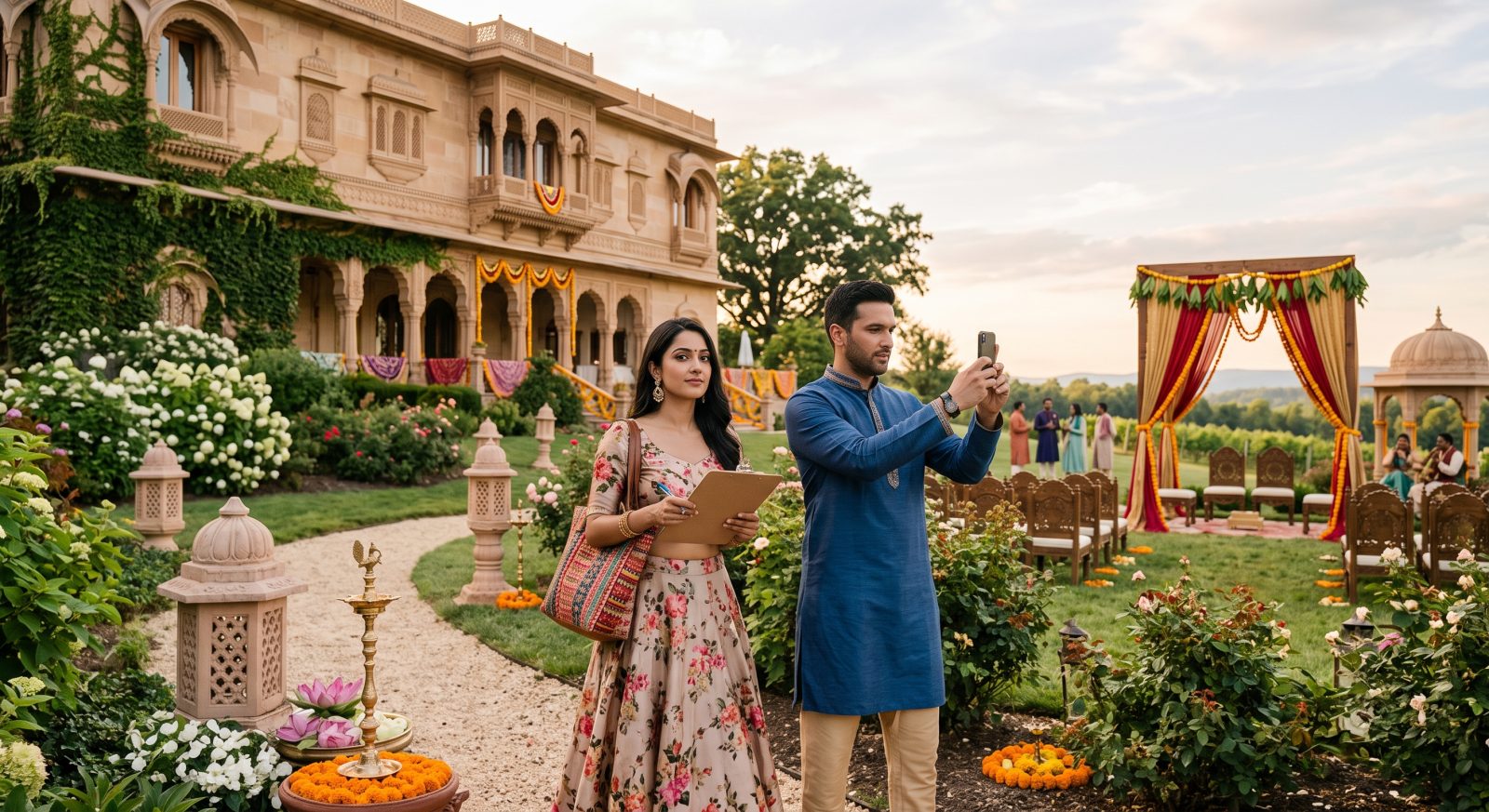
Most families shortlist halls by guest count and plate price, but a hall that suits an evening reception can fall short at six in the morning. When you compare wedding venues in Bangalore, ask every hall these questions and get the answers in writing.
- Early access. The muhurtham is often early, so the hall should allow décor and the priest's setup the night before and open well before dawn.
- A clear walkway for Kashi Yatra. You need a covered, uncluttered route from the groom's room to where the bride's family waits, wide enough for relatives, musicians and photographers.m
- Room and fittings for the Oonjal. Ask whether the hall has a swing or rigging points or your decorator must bring a frame, and whether milk and coloured rice on the floor are allowed.
- A raised mandap with clear sightlines. Pillars or a low stage can hide the mangalsutra moment. On your site visit, sit in the back row and check.
- Homam permission and ventilation. Confirm the sacred fire is permitted, how smoke is cleared and what fire safety is in place.
- Sound and power backup. The getti melam must be heard, and a muhurtham cannot wait for a power cut, so the generator should cover lights, sound and air conditioning.
- A bridal room near the stage. The bride changes saree between rituals, so a room close to the mandap saves minutes that matter.
- Dining and rooms for family. Ask how many guests the dining hall seats per batch for the banana-leaf meals, and whether relatives can stay on site before the early start.
How early should you book a kalyana mantapa for a muhurtham date?
Book as soon as the family fixes the date. Tamil families generally avoid Aadi (mid-July to mid-August) and Margazhi (mid-December to mid-January), and Kannada and Telugu families avoid Ashada, so demand bunches onto fewer auspicious dates. Six to nine months ahead is a sensible lead time.
Planning your muhurtham at The Veloria Grand
Our Hosa Road venue in Singasandra has three halls for 50 to 300 guests and 52 hotel rooms on the same property, so both families can stay over and be ready well before the muhurtham. Bring your date and ritual list to a site visit, and ask the booking desk about the oonjal setup, homam rules and morning access for your day.
Frequently asked questions
What is the order of rituals on a South Indian wedding morning?
In a typical Tamil Brahmin wedding, the order is Kashi Yatra, Maalai Maatral, Oonjal, Kanyadaanam, Mangalsutra Dharanam and Saptapadi. Customs vary between families, so the priest fixes the final sequence around the muhurtham.
Why does the groom pretend to leave for Kashi?
Kashi Yatra shows the groom choosing married life over study and renunciation. The bride's father, or in many Telugu and Kannada families her brother, persuades him to stay.
How many knots are tied in the mangalsutra?
Three. The groom ties them at the muhurtham, and in many Tamil families his sister ties the second and third while the getti melam plays.
Can a banquet hall host a traditional South Indian wedding?
Yes, if it allows a raised mandap and a ventilated homam, opens early enough for the muhurtham and has space for the oonjal. Confirm each point in writing before booking.