Wedding
Hindu Wedding Rituals Explained: Muhurtham, Kanyadaan, Saptapadi & the Hall Setup Each One Needs
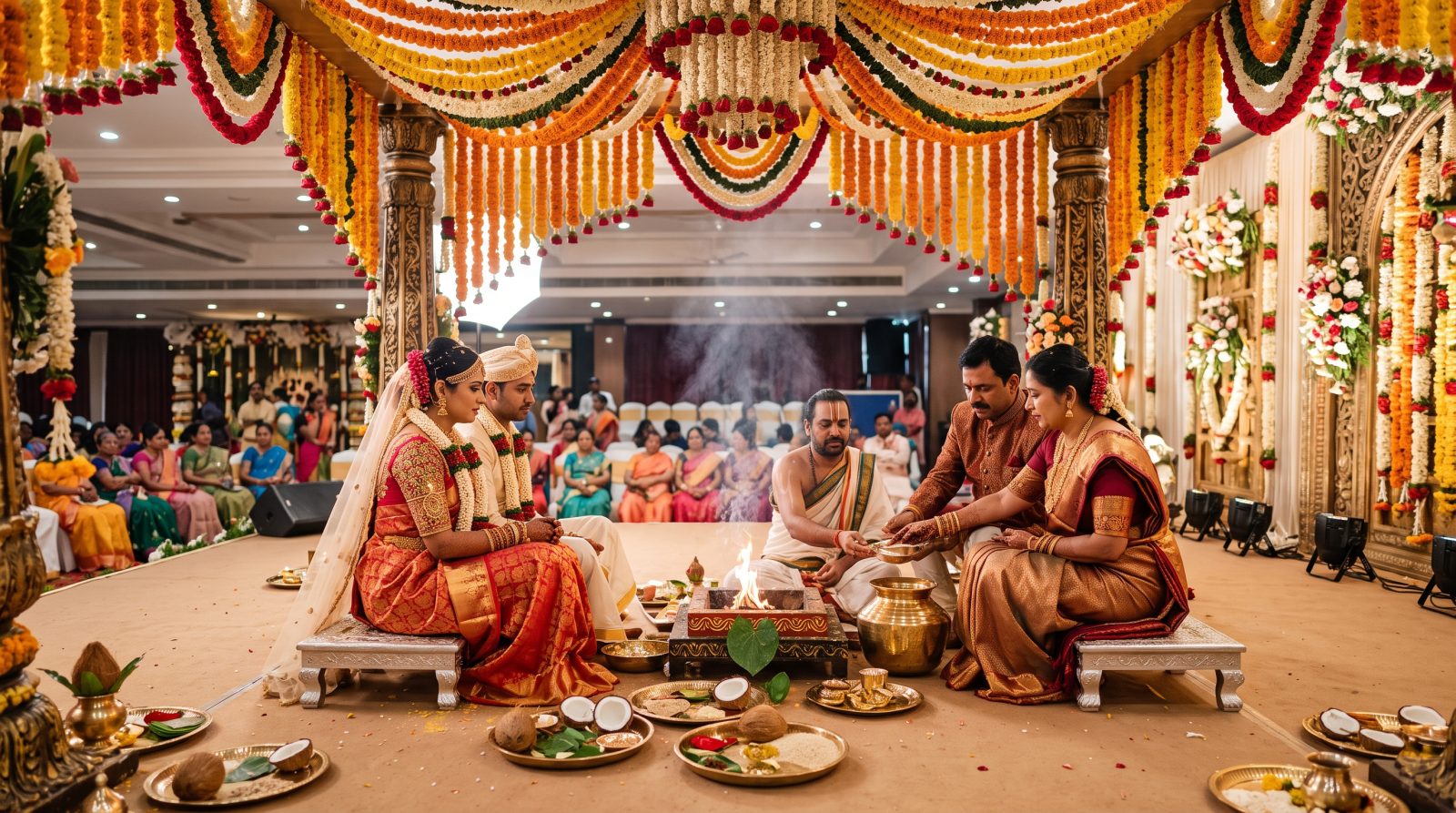
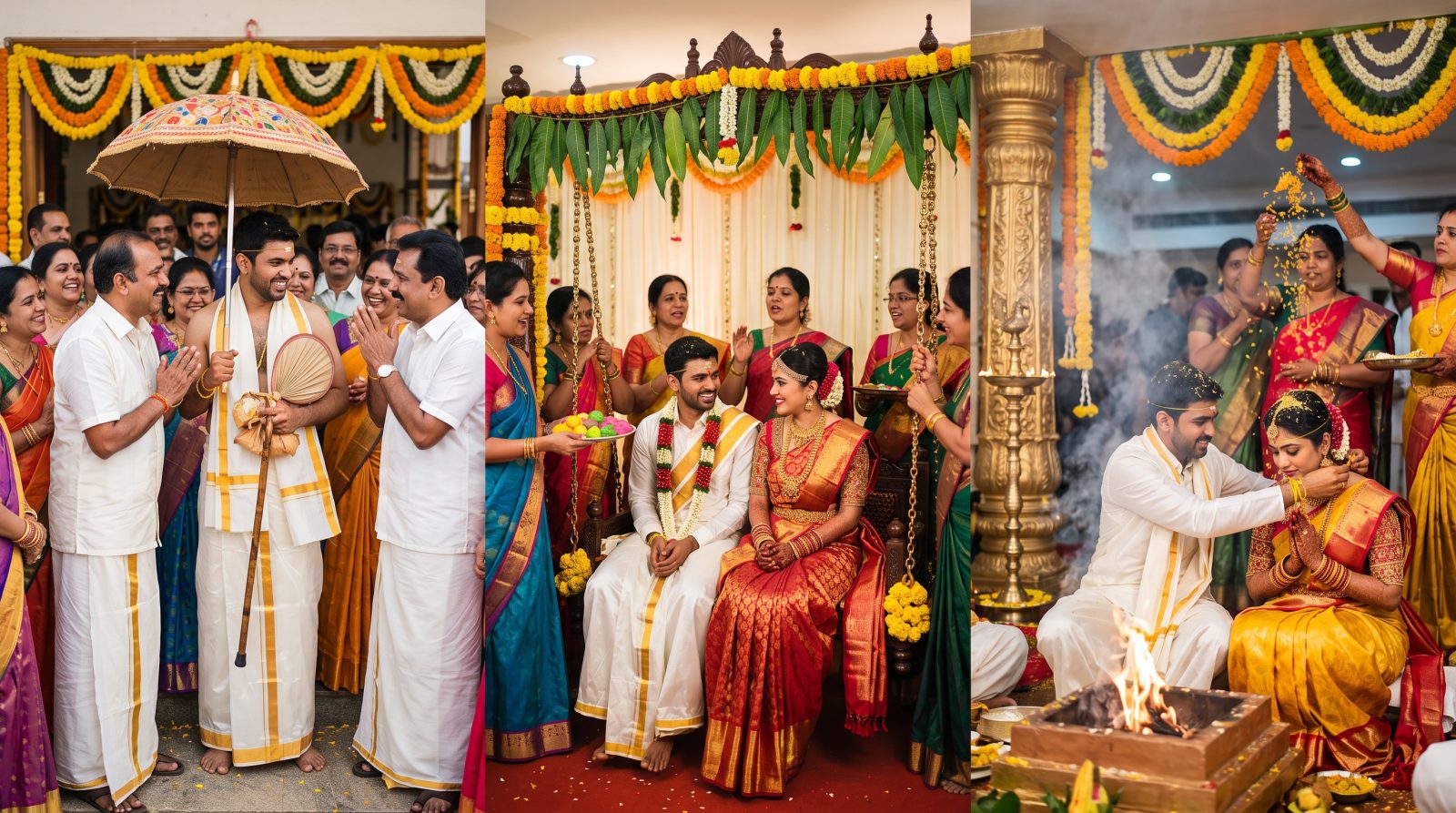
Three rituals carry the weight of a Hindu wedding. Muhurtham is the auspicious time at which the marriage is sealed, Kanyadaan is the moment the bride's parents give her hand to the groom, and Saptapadi is the seven steps the couple take together beside the sacred fire. In most South Indian weddings they unfold on the same morning: Kanyadaan first, the thali tied at the muhurtham, and Saptapadi soon after, with small changes from one community to the next. Each ritual also asks something different of the wedding hall, and that is the part many families only discover on the day.
What Is Muhurtham in a Hindu Wedding?
Muhurtham is the auspicious window of time for the main wedding rite. The family priest or astrologer fixes it by reading the panchangam alongside the couple's horoscopes, and the window is often short, sometimes little more than an hour.
In Tamil and Kannada weddings, the mangalya dharanam, or tying of the thali, is timed to the minute, and the nadaswaram and thavil break into the gettimelam so nobody misses the moment. Telugu families mark the muhurtham with Jeelakarra Bellam, a paste of cumin and jaggery the bride and groom place on each other's heads. Many muhurthams fall in the early morning, and most families avoid Ashada (Aadi for Tamil families), which runs roughly from mid-June to mid-July. Because auspicious dates cluster, the most sought-after halls in a city get booked on the same handful of days.
Hall setup for the muhurtham
- Book the hall from the previous evening so the mandap is dressed and checked before the priest arrives at dawn.
- Ask for separate bride and groom rooms with enough power points for the makeup team.
- Test the mandap microphone the night before. Mantras get lost in a large hall without one.
- Have breakfast ready to serve as soon as the thali is tied. Guests who woke at 4 AM for a 7 AM muhurtham head to the dining hall the minute the gettimelam stops.
What Is Kanyadaan and Who Performs It?
Kanyadaan is the ritual in which the bride's parents place her hand in the groom's and pour water over their joined hands, entrusting her to him and his family. Tamil and Telugu homes call it Kanyadanam, and Kannada weddings know it as Dhaare, after the stream of water poured during the rite.
It is usually performed by the bride's father and mother together. If the father has passed away, the mother, an elder brother, an uncle or another married elder couple from the family can take that place, and the family priest guides the choice.
Hall setup for Kanyadaan
- The mandap must seat the couple, both sets of parents and the priest on low wooden seats without crowding. A stage that looks generous in photos feels cramped once seven people sit down with a kalasam, coconuts and plates between them.
- Keep the front rows close and the sightline clear. This is one of the most photographed moments of the day, and elders at the back notice when they cannot see.
- Light the mandap from the front as well as above, so faces are not lost under the canopy.
When families compare marriage venues in Bangalore, they usually check capacity, parking and dining space. Very few ask for the depth of the mandap, and that single measurement decides how comfortable Kanyadaan feels for everyone sitting on it.
What Is Saptapadi and Why Does It Make the Marriage Legal?
Saptapadi means "seven steps." The couple walk seven steps together beside the sacred fire, and each step carries a vow: nourishment, strength, prosperity, happiness, children, long life through the seasons, and lifelong friendship. In many South Indian weddings the groom gently guides the bride's right foot through each step.
Saptapadi is also the legal heart of the ceremony. Under Section 7 of the Hindu Marriage Act, 1955, where Saptapadi is part of the customary rites, the marriage becomes complete and binding when the seventh step is taken. In April 2024, the Supreme Court of India reaffirmed that a Hindu marriage needs its essential ceremonies to be valid, and that a registration certificate on its own does not make it one.
Hall setup for Saptapadi
- Place the homa kundam on a metal tray or a bed of sand, keep a fire extinguisher within reach, and keep drapes and hanging garlands well away from the flame.
- Closed, air-conditioned banquet halls can trap homa smoke and set off smoke detectors in the middle of the mantras. Ask the venue in advance how they ventilate the mandap during the homam.
- Leave a clear ring of floor around the fire, free of chairs, camera stands and flower baskets, so the bride can walk in a heavy silk saree without catching her pleats.
How to Plan One Hall Around All Three Rituals
Many South Indian families hold the reception the evening before and the muhurtham the next morning at the same venue. That makes the overnight changeover the real test: the reception stage comes down, the mandap goes up, and the dining hall switches from dinner buffet to banana-leaf breakfast within a few hours.
Ask every hall you shortlist who handles this changeover and when the mandap will be ready for the priest. A team that has hosted many muhurtham mornings will answer without hesitation.
If you are planning a muhurtham morning in Bangalore, visit The Veloria Grand and ask our team to walk you through the mandap, the homam arrangements and the overnight changeover for your date.
Frequently Asked Questions
How long does a Hindu wedding ceremony take?
The core rituals, from Kanyadaan to Saptapadi, usually take two to three hours. With Kashi Yatra, the garland exchange and the post-wedding rites added, the full ceremony often fills the whole morning.
Can the mother perform Kanyadaan?
Yes. Many families have the mother perform Kanyadaan, particularly when the father has passed away. Your family priest can explain how it is done in your tradition.
Is a Hindu marriage valid without Saptapadi?
The Hindu Marriage Act accepts the customary rites of either the bride's or the groom's side. Where those rites include Saptapadi, the marriage is complete only when the seventh step is taken.