Wedding
Wedding Venue Selection Guide: What to Look For Before Booking
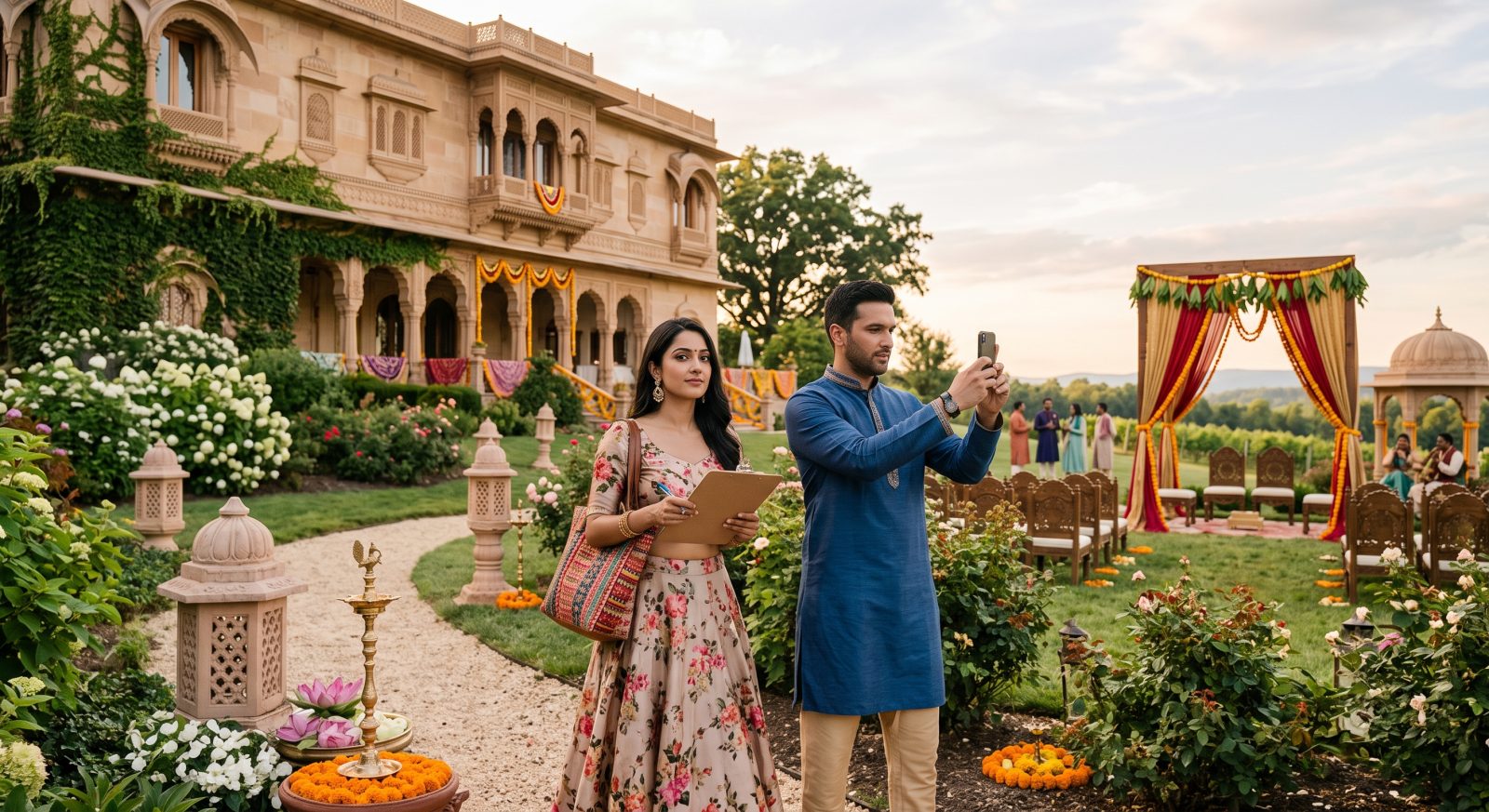
The best wedding venue is the one that fits your guest count comfortably, sits within your budget, suits your ceremony timings and clearly states what the package includes. Before you pay an advance, check seven things: capacity, location and parking, ceremony timings, food policy, inclusions, total cost and the written agreement. A venue that passes all seven will usually save you stress, money and last-minute surprises.
What should you decide before you start looking for a wedding venue?
Venue hunting works best when you already know three things: your budget, your approximate guest count and your preferred date window.
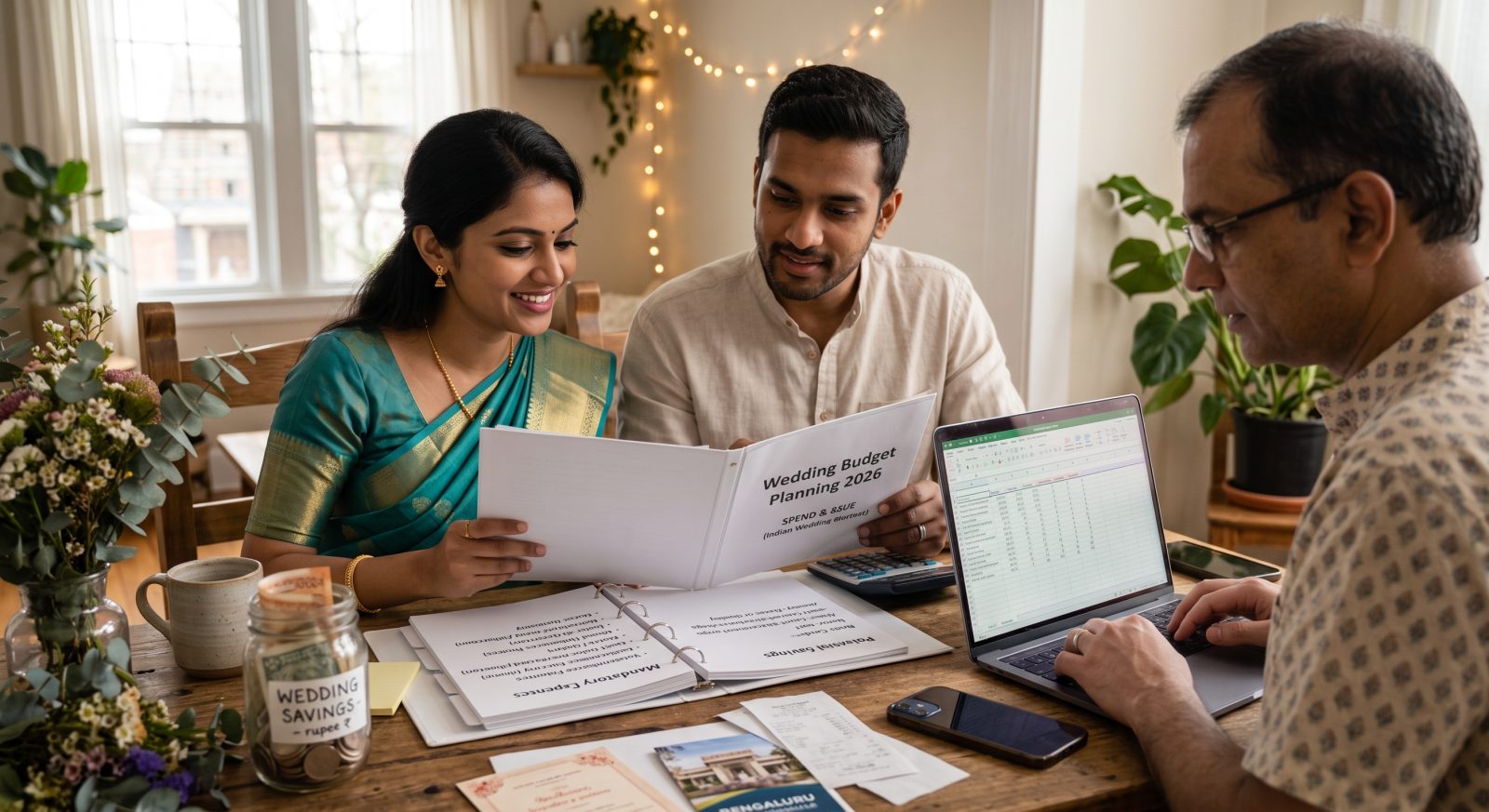
Start with the budget. A common way to plan is to set aside a share of your total wedding budget for the venue and food together, since the two are often linked in a package. Fix this number first so you do not fall for a beautiful hall that stretches your plan.
Next, estimate your guest list honestly. Most families begin with a number and end up higher once relatives and friends are added. Plan with a buffer so you are not forced to switch halls later.
Finally, note your date options. In South India, many families choose dates based on muhurtham and the panchang. Auspicious dates book out early, so keep two or three alternative dates ready. Flexibility on the date often gives you better availability and better terms.
How do you choose the right venue size for your guest count?
A venue's listed capacity is usually the maximum number of people it can hold, not the number that will feel comfortable. Always ask how the capacity is counted: seated, floating or both.
For a wedding with a stage, a dining area and a photography zone, you need more space than a simple seated event. Ask the venue how many guests the hall holds for a ceremony with a stage and how many the dining area serves at one time. A hall that looks large but has a small dining space creates queues, and queues are what guests remember.
A simple rule helps here. If your guest list sits close to the venue's maximum, move up to the next size. A slightly larger hall with good flow feels better than a packed one.
Which location works best for your guests?
Location decides how many of your guests arrive on time and relaxed. Think about where most of your guests will travel from, including elderly relatives and out-of-town family.
Bangalore traffic changes the picture completely at peak hours. A venue that looks ten minutes away on a map can take much longer on a weekday evening or a busy weekend. Check the route at the same time of day your event will run.
Think about stay as well. If many guests are coming from other cities, look at how close the venue is to hotels, the airport or the railway station. Proximity to your own home matters too, because the bride and groom's families will make several trips in the days before the wedding.
If you are still comparing wedding places in bangalore, shortlist three venues in different areas first, then visit each one at the time of day your event will actually take place. A venue always looks different in the morning than it does in the evening.
What should you check during a venue site visit?
A site visit tells you more than any brochure. Go with a checklist and, if possible, take a family member who will notice practical details.
Check parking first. Ask how many cars and two-wheelers the venue can hold and whether there is valet support. Poor parking is one of the most common guest complaints.
Look at the stage area, the lighting and the sound setup. Ask where the decorators and photographers can place equipment. Walk the path from the entrance to the stage and from the stage to the dining hall, and picture the flow with a few hundred guests.
Inspect the bridal and groom rooms. These rooms need air conditioning, mirrors, charging points and privacy. Ask how many family members can stay in them during the ceremony.
Ask about power backup, air conditioning in the main hall and restroom capacity. Also check accessibility, such as ramps and lift access, because elderly guests will use them.
Can the venue support your ceremony timings and rituals?
This is the question many couples forget. South Indian weddings often begin very early with muhurtham, and some run across several functions over two or three days.
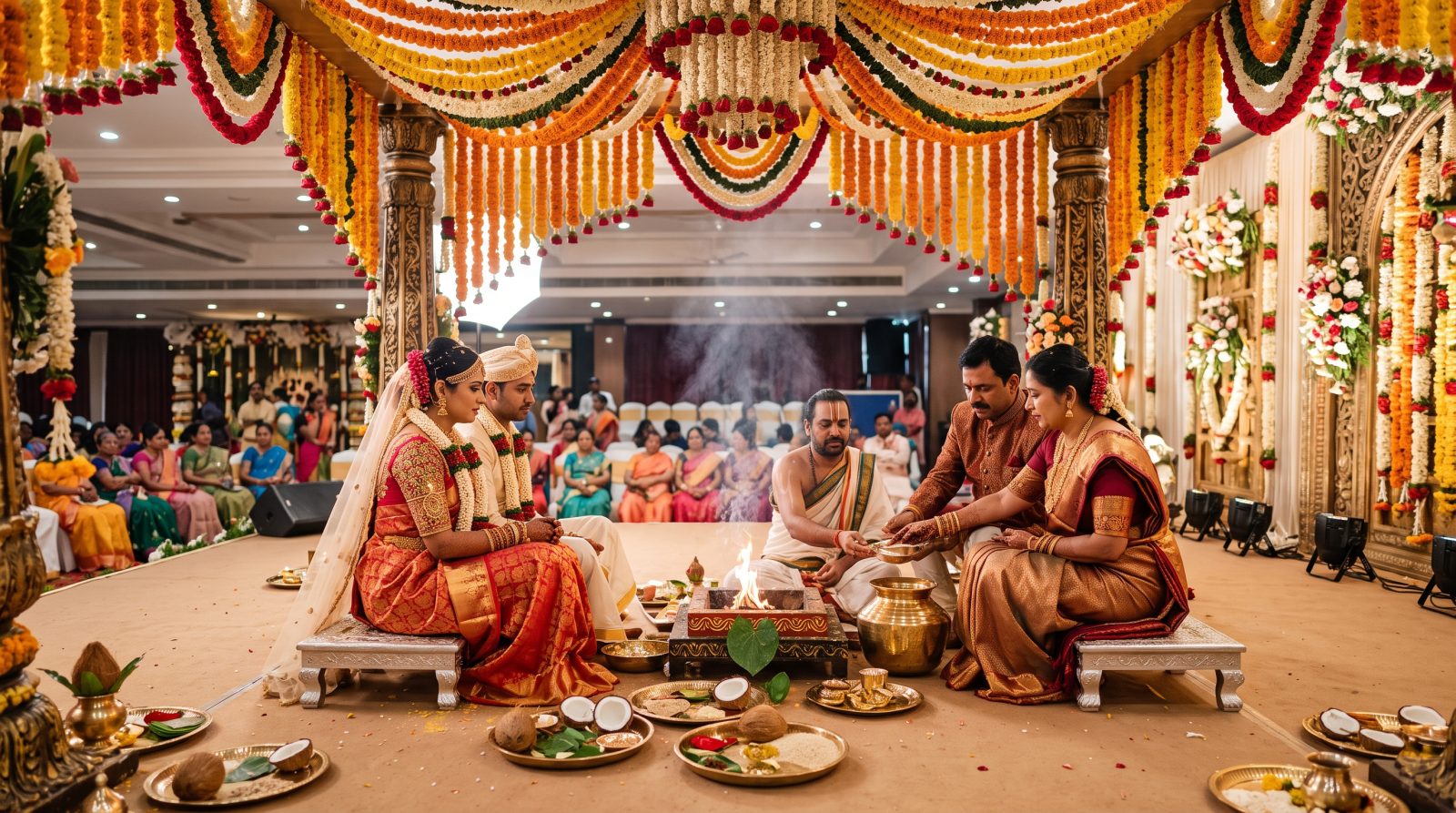
Ask if the hall is available the evening before for decoration and rituals. Ask what time you can enter, when you must vacate and whether extra hours cost more. Confirm whether the venue allows fire rituals, nadaswaram and live music, and whether there are any restrictions on the havan area.
Local sound rules usually require music to wind down at night, so ask about the exact cut-off time for the reception. If your plan includes a sangeet or DJ evening, confirm this before booking.
How does the food and catering policy affect your wedding?
Food is usually the largest single cost after the venue, and it is where couples often lose flexibility. Some venues have in-house catering only. Others allow outside caterers with a fee. Some give you a approved caterer list.
Ask these questions plainly. Is the menu pure vegetarian, or can non-vegetarian be served? Can you bring your own traditional caterer for regional dishes? Is there a corkage or outside-catering charge? How many serving counters are provided, and how much staff is included?
If your family cares deeply about a specific cuisine, such as a traditional Karnataka, Andhra, Tamil or Kerala feast, confirm that the venue's kitchen or caterer can deliver it. Ask for a tasting before you commit.
What does the venue package actually include?
Two venues can quote the same price and offer very different value. Ask for the inclusions in writing, item by item.
Check whether the quote covers hall rent, air conditioning, basic lighting, sound, stage, generator backup, housekeeping, security and rooms. Ask what is charged extra, such as extra hours, additional rooms, decoration, electricity and cleaning.
Also ask about decoration rules. Some venues require you to use their decorator, while others allow outside decorators for a fee. This one detail can change your total budget significantly.
How do you compare venue costs fairly?
Compare the total cost, not the rental alone. Add the hall rent, food cost per plate multiplied by your guest count, decoration, rooms, power, taxes and any extra-hour fees.
Ask whether the quoted price includes GST and whether the price changes between weekdays, weekends and peak wedding months. Auspicious dates can cost more, so ask about the rate for each date you are considering.
Ask for the same details from every venue on your shortlist. When you line up the totals, the cheapest hall on paper is often not the cheapest in practice.
What should be in your wedding venue agreement?
Never rely on a verbal promise. Get everything in writing before you pay.
The agreement should state the date and timings, the number of guests covered, the full list of inclusions, the payment schedule and the cancellation and refund terms. It should also say what happens if you change the date, who is responsible for damages, and what the venue's backup plan is for power cuts or heavy rain.
Pay the advance only against a receipt. Keep a copy of the signed agreement and every quotation. If a venue is unwilling to put its promises on paper, that is a warning sign.
What mistakes should you avoid when booking a wedding venue?
Couples most often book based on photos alone, without visiting at the event time. They also choose a venue before fixing the guest count, ignore parking and ignore the timing of their muhurtham.
Another common mistake is comparing only the hall rent and missing the extras. Some couples also skip the tasting or fail to check the cancellation terms. Avoid all of these, and your booking becomes far safer.
Frequently Asked Questions
How early should you book a wedding venue?
Book as early as your date is confirmed, and for auspicious dates and peak wedding months, plan well in advance. Popular halls fill up first, so early booking gives you more choice and better terms.
How many venues should you visit before deciding?
Visit at least three. Comparing three venues side by side shows you differences in space, service and pricing that one visit cannot.
What is the most important factor when selecting a wedding venue?
Fit. The venue must match your guest count, budget and ceremony timings. A beautiful venue that does not fit these three will cause problems on the day.
Should you choose a venue with in-house catering?
In-house catering is convenient and often simpler to manage. If your family wants a specific traditional menu, check whether outside caterers are allowed and what that costs.
What questions should you ask a wedding venue before booking?
Ask about capacity, parking, timings, food policy, inclusions, extra charges, decoration rules, power backup and cancellation terms. Get every answer in writing.