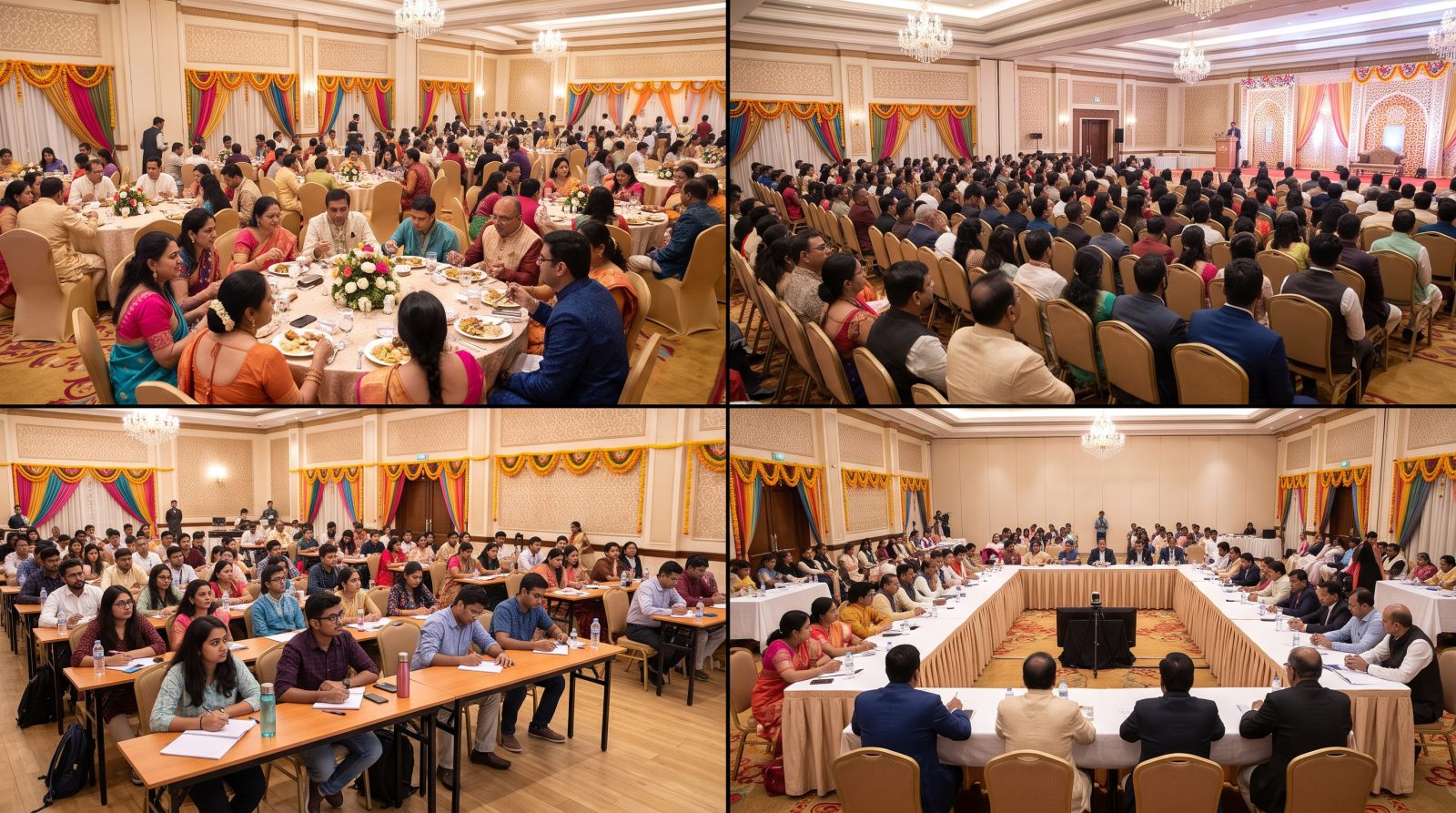
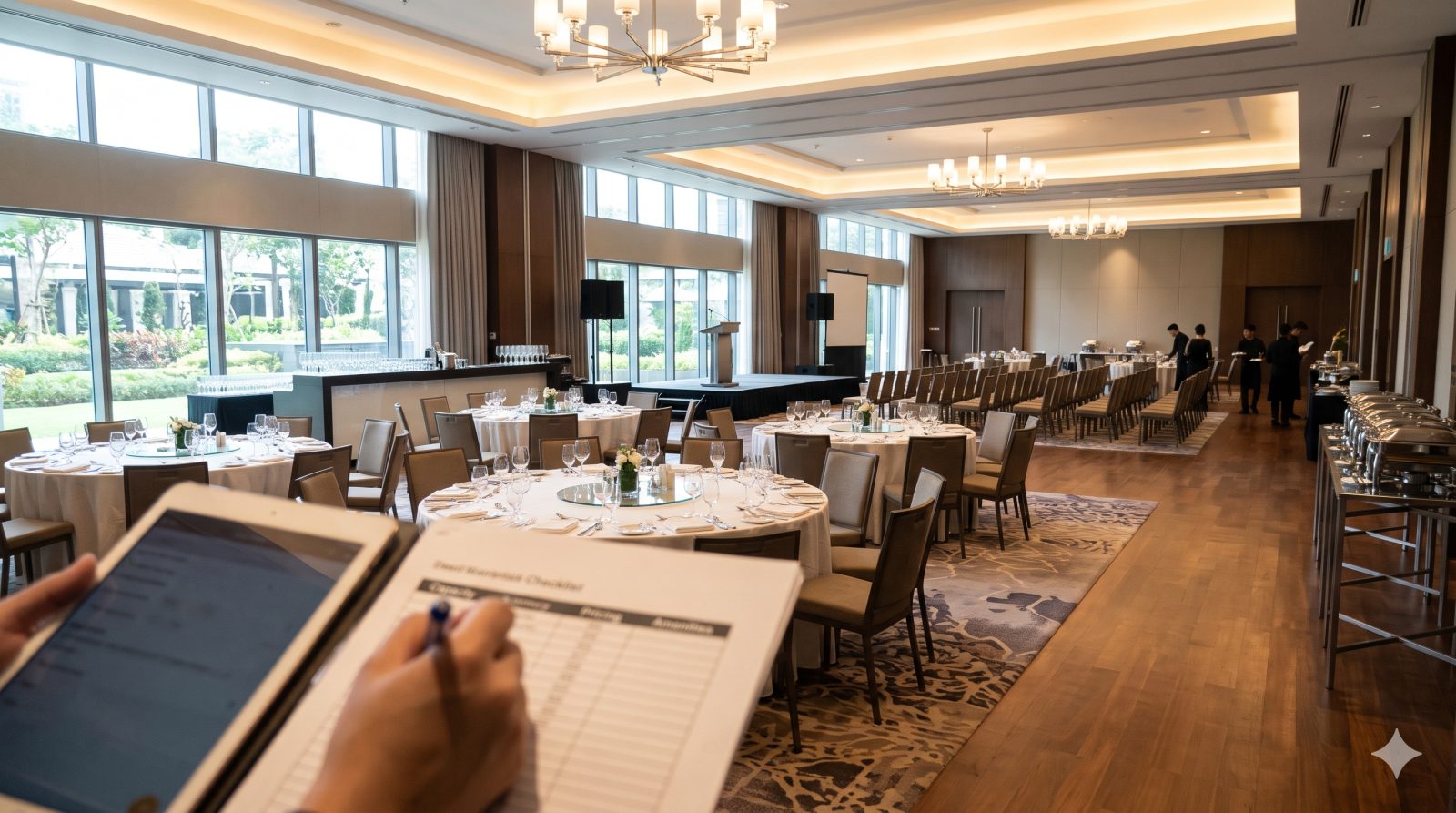
Banquet Hall
Hotel Banquet Hall vs Standalone Banquet Venue: Which Gives You More Flexibility?
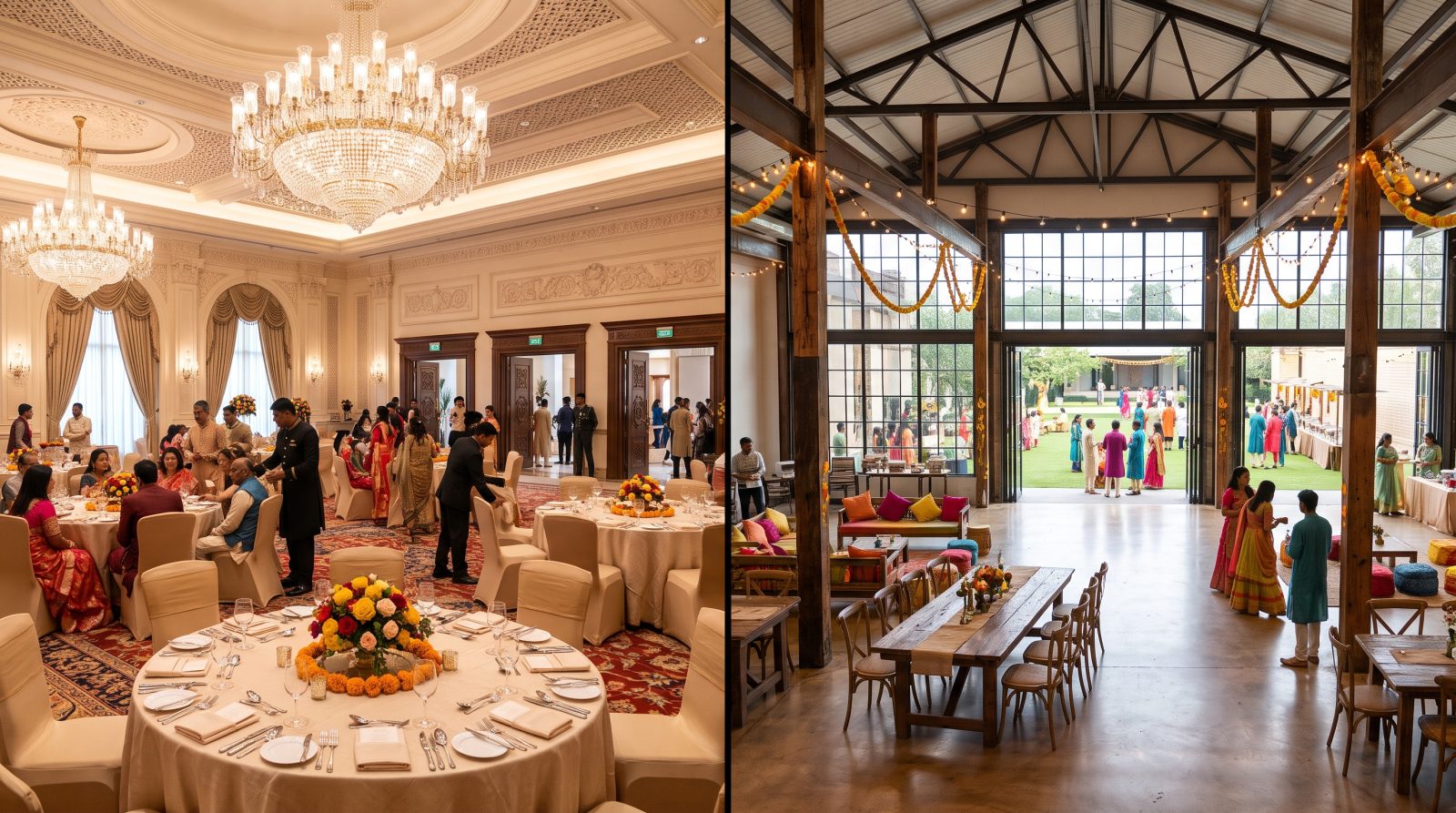
A standalone banquet venue usually gives you more flexibility than a hotel banquet hall. Standalone venues are built only for events, so they tend to allow outside decorators, longer setup windows and fewer add-on fees. Hotel banquet halls trade some of that freedom for rooms, a bar and polished in-house service, and many of them insist that all food comes from their own kitchen.
That is the short answer. The longer answer depends on what you need to control. A family planning a South Indian wedding with a 6 AM muhurtham has very different needs from an HR team booking an annual day for 200 people. This guide breaks flexibility down into the five areas that matter most and shows which venue type tends to win each one.
What is the difference between a hotel banquet hall and a standalone banquet venue?
A hotel banquet hall is an event space inside a hotel. It shares its kitchen, staff, parking and house rules with the rest of the property, and events are only one part of a business that also sells rooms and restaurant meals.
A standalone banquet venue is a property built mainly for functions such as weddings, receptions, engagements, birthdays and corporate events. Its kitchen, staff and calendar exist to serve events, so its policies are usually written around what hosts and families ask for.
Neither type is better by default. The real difference shows up in the fine print: who cooks the food, which vendors can enter, how early the decorator can start, and what gets added to the final bill.
Which venue type gives you more flexibility?
Here is how they compare on the five things hosts care about most.
Catering and menu
Food is where hotels are usually strictest. Many hotel banquet listings in Bangalore say in-house catering only, which means you pick from the hotel's menus and cannot bring in a family caterer or a regional specialist.
Standalone venues vary more. Some cook in-house, some allow outside caterers, and some do both. If a particular cook, a traditional banana-leaf meal or a specific community cuisine matters to your family, a standalone venue is more likely to make room for it. Ask whether outside catering needs written approval and whether any kitchen or service charge applies.
Decor and outside vendors
Most hotel banquets in the city allow outside decorators, but some limit you to a panel of approved vendors, and some charge access fees for outside decor teams, cakes or photographers. Hotels also apply building-wide safety rules, so ask early about lamps or a homam, heavy floral structures and anything fixed to walls.
Standalone venues tend to be more relaxed here because event setup is their everyday work. Even so, check for decoration access fees, cake-cutting fees and ring-platter charges, since these small add-ons can push a quote up quickly.
Timing, setup and teardown
A hotel ballroom often hosts more than one event in a day, so slots can be fixed and setup windows short. If the hall has a lunch booking, your decorator may get only a few hours before an evening reception.
Standalone venues usually give you more room here. That matters for early morning muhurthams, two-day weddings or elaborate mandap setups that need the hall well before guests arrive. Ask exactly when your vendors can enter, when the hall must be cleared and what extra hours cost.
Guest count and hall size
Many hotels have one or two large ballrooms, which can feel empty for an 80-person engagement. A standalone venue with several halls of different sizes lets you match the room to your guest list, so a small function still feels full and a big reception does not feel cramped.
Pricing and add-ons
Hotel packages are usually priced per plate, often with a minimum guest guarantee, and extras such as service charges, outside vendor fees or extended hours can sit outside the headline price. Standalone venues are often easier to negotiate with, but their quotes vary too. Whichever type you choose, ask for an itemised quotation that shows the menu, hall slot, taxes and every add-on in writing.
When is a hotel banquet hall the better choice?
A hotel banquet hall makes sense when convenience matters more than control. It is usually the better fit if:
- Many guests are travelling from outside Bangalore and need rooms in the same building
- You want bar service run under the hotel's own licence
- The event is corporate and needs AV support, breakout rooms and business-style service
- You are happy with the hotel's menus and do not need an outside caterer
- You want a well-known hotel name on the invitation for a formal reception
When is a standalone banquet venue the better choice?
A standalone venue suits hosts who want the event to run their way. It is usually the better fit if:
- You want to bring your own decorator, photographer, mehendi artist or cake
- Your function needs long or unusual hours, such as an early muhurtham or a wedding spread over two days
- You want a hall sized to your guest count rather than one oversized ballroom
- You want an itemised quote without vendor access fees
- You are booking in peak season, which runs from November to February in Bangalore, and need more date options
What should you ask before booking either type?
Whether you are comparing hotels, standalone halls or a mix of both, put the same questions to every venue. When you shortlist a banquet hall in Bangalore, ask for the answers in writing so nothing changes after you have paid.
- Is in-house catering compulsory, or can we bring an outside caterer?
- Are outside decorators, photographers and cakes allowed, and is there a fee for any of them?
- What time can vendors enter, and when must the hall be cleared?
- Is there a minimum guest guarantee, and what happens if numbers drop?
- What is included in the quote: seating, stage, power backup, housekeeping and parking?
- How much advance is needed, and what are the cancellation terms?
- Are there rooms on site or nearby for outstation guests?
Where does Veloria Grand fit?
Veloria Grand is a standalone banquet brand with 30+ halls across 17 venues in Bangalore. Outside decorators and outside cake are allowed at no fee, and there are no ring-platter, decoration access or cake-cutting charges. Catering is in-house by default, and outside caterers are considered case by case with prior written approval.
The Hosa Road flagship in Singasandra also covers the one area where hotels usually win. It has three AC halls for 50 to 300 guests, 52 hotel rooms on the same property for outstation family, and parking for 60+ cars. Per-plate catering starts at ₹599 for vegetarian and ₹650 for non-vegetarian, plus GST, and every quote is itemised.
Frequently asked questions
Is a hotel banquet hall more expensive than a standalone banquet venue?
Not always, but hotel packages often carry more add-ons, such as service charges, minimum guest guarantees and outside vendor fees. A standalone venue can work out cheaper for a similar menu, especially if it allows outside decor at no fee. Compare itemised quotes rather than headline per-plate prices.
Can I bring my own caterer to a hotel banquet hall?
Usually not. Many hotel banquet halls in Bangalore allow in-house catering only. Some standalone venues allow outside caterers or consider them case by case. If a specific caterer matters to you, confirm the policy in writing before you pay any advance.
Which is better for a South Indian wedding with an early muhurtham?
A standalone venue is usually easier, because it can give you the hall early and for longer with fewer clashes from other bookings. Confirm the vendor entry time, whether rituals such as a homam are allowed indoors, and whether rooms are available for family staying overnight.
Do standalone banquet venues have rooms for guests?
Some do. Many standalone halls have no accommodation, so outstation guests stay at nearby hotels. Others, such as Veloria Grand's Hosa Road flagship with 52 on-site rooms, combine a standalone hall with a place to stay in the same building.
How early should I book a venue for peak wedding season?
For dates between November and February, especially Saturdays with auspicious muhurthams, book as early as you can. These slots fill first and often need a higher advance. Weekday and off-season dates give you more choice and more room to negotiate.