Banquet Hall
Banquet Seating Arrangements Explained: Round Table, Theatre, Classroom and U-Shape
The seating layout you choose shapes almost everything about an event. It decides how guests talk to each other, how clearly they see the stage, how smoothly the food goes out, and how many people the hall can actually hold. Get it right and the room feels effortless. Get it wrong and even a well-planned event feels cramped or cold.
The four most common banquet arrangements are round table, theatre, classroom and U-shape. In short: round table suits weddings and social dinners, theatre fits large talks and launches, classroom works for training and workshops, and U-shape is built for small, high-interaction meetings. Here is how to choose between them.
What is a round table seating arrangement?
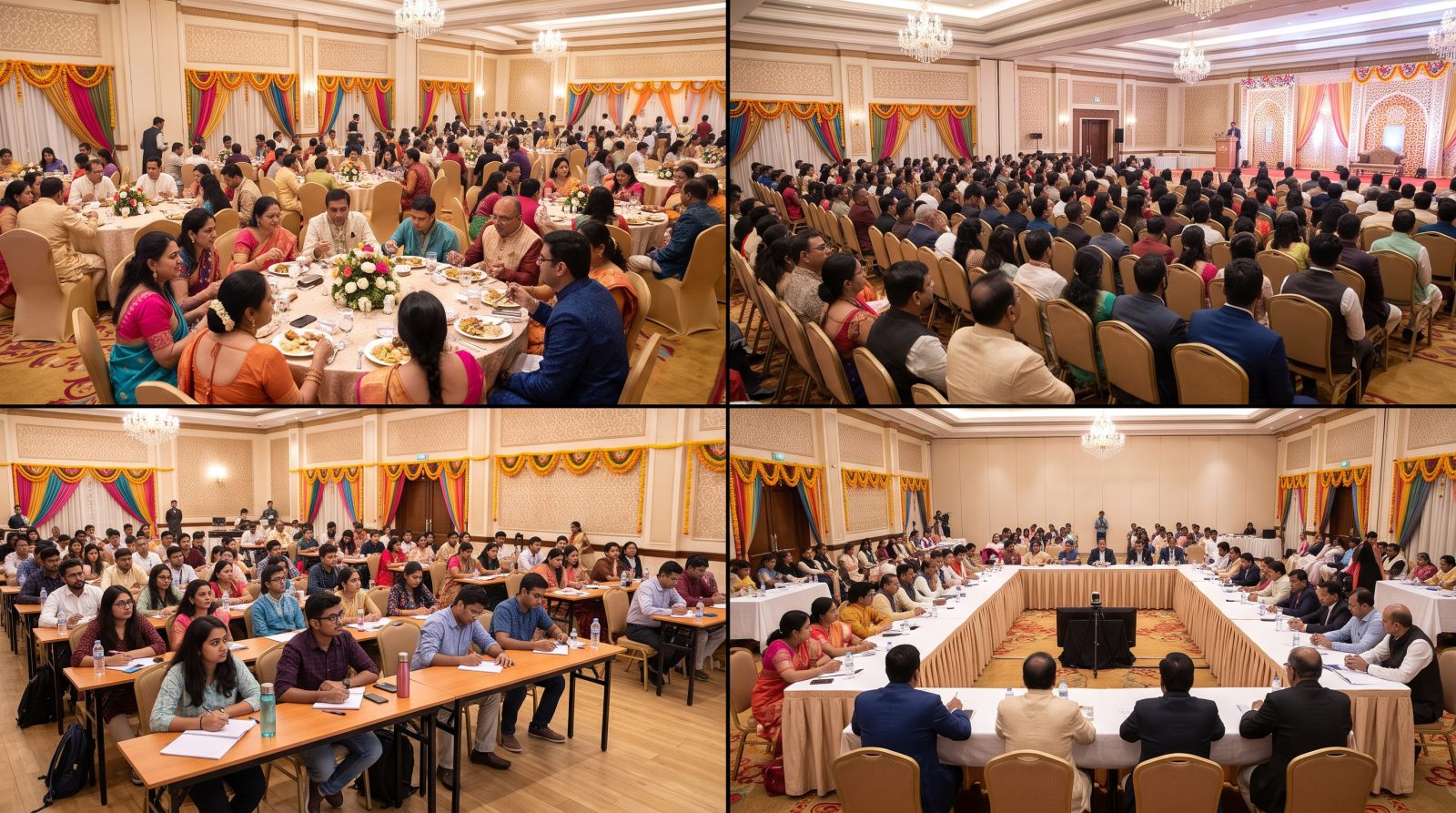
A round table arrangement uses circular tables, usually seating 8 to 10 guests each, spread evenly across the hall. It is the classic choice for weddings, receptions, gala dinners and award nights.
The real strength of this layout is conversation. Because everyone at a table faces inward, guests can talk across and around the table without turning their backs on anyone, which keeps the room warm and social. It also makes food service simple, since waiters can reach every seat from the outside of the table.
The trade-off is space. Round tables use more floor area per guest than any other layout, and a few seats at each table will have their back to the stage. Use round tables when the meal and the mingling matter more than a presentation.
When should you use theatre style seating?
Theatre style seating is rows of chairs facing a stage or screen, with no tables in front of guests. It is the layout you see at conferences, product launches, annual general meetings and keynote talks.
This arrangement holds the most people in the least space, so it is the right call when your priority is fitting a large audience into the room and keeping every eye on the front. The flow is one directional: information goes from the stage to the audience.
What it is not built for is writing, eating or group discussion. There is nowhere to rest a notebook, a plate or a laptop. If guests need to take notes or share a meal, theatre style will frustrate them. Keep it for events that are mostly watch and listen.
What is classroom style seating best for?
Classroom style seating uses rows of narrow tables with chairs behind them, all facing the front. Think of a lecture hall or a training room. Every guest gets both a clear view of the presenter and a surface to work on.
This makes it the best layout for training sessions, workshops, seminars and certification programmes, where people need to follow a presentation and take notes, use a device or handle printed material at the same time.
The cost of that comfort is capacity. Classroom seating holds far fewer people than theatre style in the same room, because each guest needs table space. Choose it when the quality of learning matters more than the headcount.
How does U-shape seating work?
In a U-shape arrangement, tables are joined into the shape of the letter U, with chairs placed around the outside edge and the open end of the U facing a screen or presenter. It usually seats 12 to 25 people.
The value of the U-shape is interaction. Everyone can see everyone else, which makes discussion, eye contact and group decisions easy. It is the standard for board meetings, strategy sessions, interviews and small interactive workshops where the whole room is expected to take part, not just listen.
It does not scale. Push past roughly 25 people and the U grows so long that guests at the far ends feel disconnected, and the open centre wastes floor space. Keep U-shape for small, high-engagement groups.
One point many hosts overlook is that the layout you can use depends heavily on the venue itself. A square hall, a long narrow room and an open lawn each suit different arrangements, and the number of pillars, exits and service doors will quietly shape your options. This is why it helps to discuss your preferred seating style early when you compare banquet halls in Bangalore, so you know the room can actually carry the plan you have in mind before you commit.
How do you choose the right banquet seating arrangement?
Work through five questions in order, and the right layout usually becomes obvious:
Guest count. A large crowd points to theatre or round tables. A small group points to U-shape or classroom.
Event format. A meal leans towards round tables. A talk leans towards theatre. Hands-on learning leans towards classroom. A discussion leans towards U-shape.
Interaction. The more you want guests to talk to each other, the more you move towards round tables and U-shape. The more it is a one-way presentation, the more theatre style fits.
Catering. If you are serving a plated meal, round tables make service clean and quick. If it is only tea, coffee or finger food, the other layouts work fine.
Space and budget. Round tables and classroom layouts need more room and more furniture per guest, which can raise cost. Theatre style is the most space and cost efficient for a big audience.
Frequently Asked Questions
Which seating arrangement holds the most guests
Theatre style holds the most guests, because it uses rows of chairs with no tables, fitting the largest number of people into the smallest space.
What is the best seating for a wedding reception
Round table seating is best for a wedding reception. It groups guests in small social circles, makes plated meal service easy and keeps the room feeling warm.
What is the difference between theatre and classroom seating
Theatre seating is chairs only, facing the front, for maximum capacity. Classroom seating adds tables so guests can write, use a device or follow printed material.
Which layout is best for a small business meeting
U-shape seating is best for small meetings of 12 to 25 people, because everyone can see each other, which supports discussion and group decisions.