Reception
How to Plan a Wedding Reception Step by Step
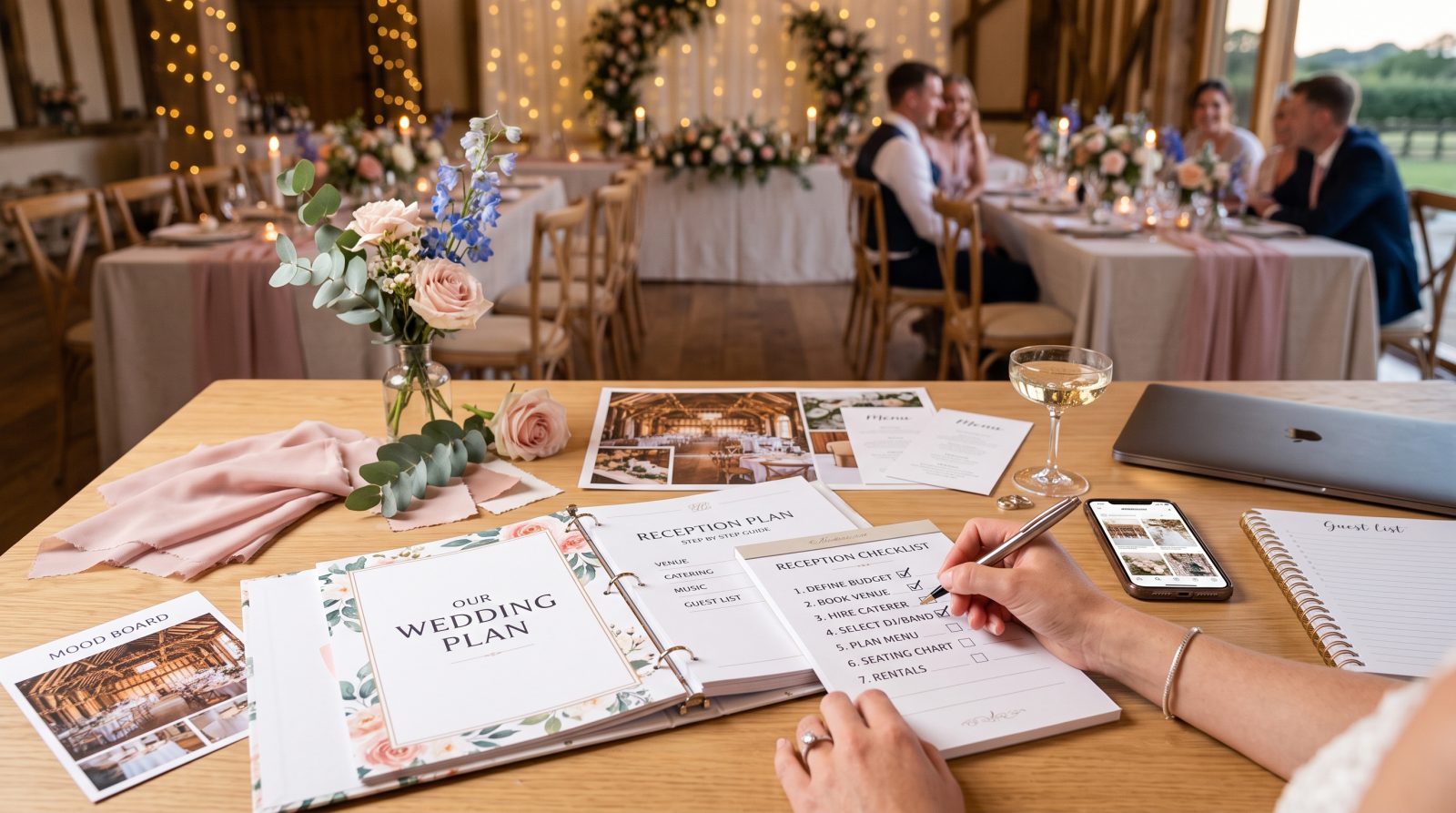
Planning a wedding reception comes down to nine decisions made in the right order: agree the budget, fix the guest count, book the venue, confirm catering, book the decorator, book photography, send invitations, build the evening run-sheet, then reconfirm every vendor in the final week. Most couples need four to six months.
The short version, in the order it has to happen:
That order is not a suggestion. Each decision sets the limits for the one that follows, and couples who jump ahead almost always pay to redo something.
Here is what each stage actually involves.
The two numbers that set your ceiling
Before you look at a single venue, settle two things: how much you are spending, and how many people are coming. Everything after this is priced against those two numbers.
The budget conversation is the harder one, and it needs both families in it. Cover four points specifically:
That last point catches most couples. Guest lists rarely shrink, and because catering is priced per plate, thirty extra names can move your total more than any decor upgrade will.
Then build the guest list properly family by family, written down, totalled. An estimate is not good enough here, because every quotation you receive from this point onward is calculated per head.
What goes wrong when couples plan out of order
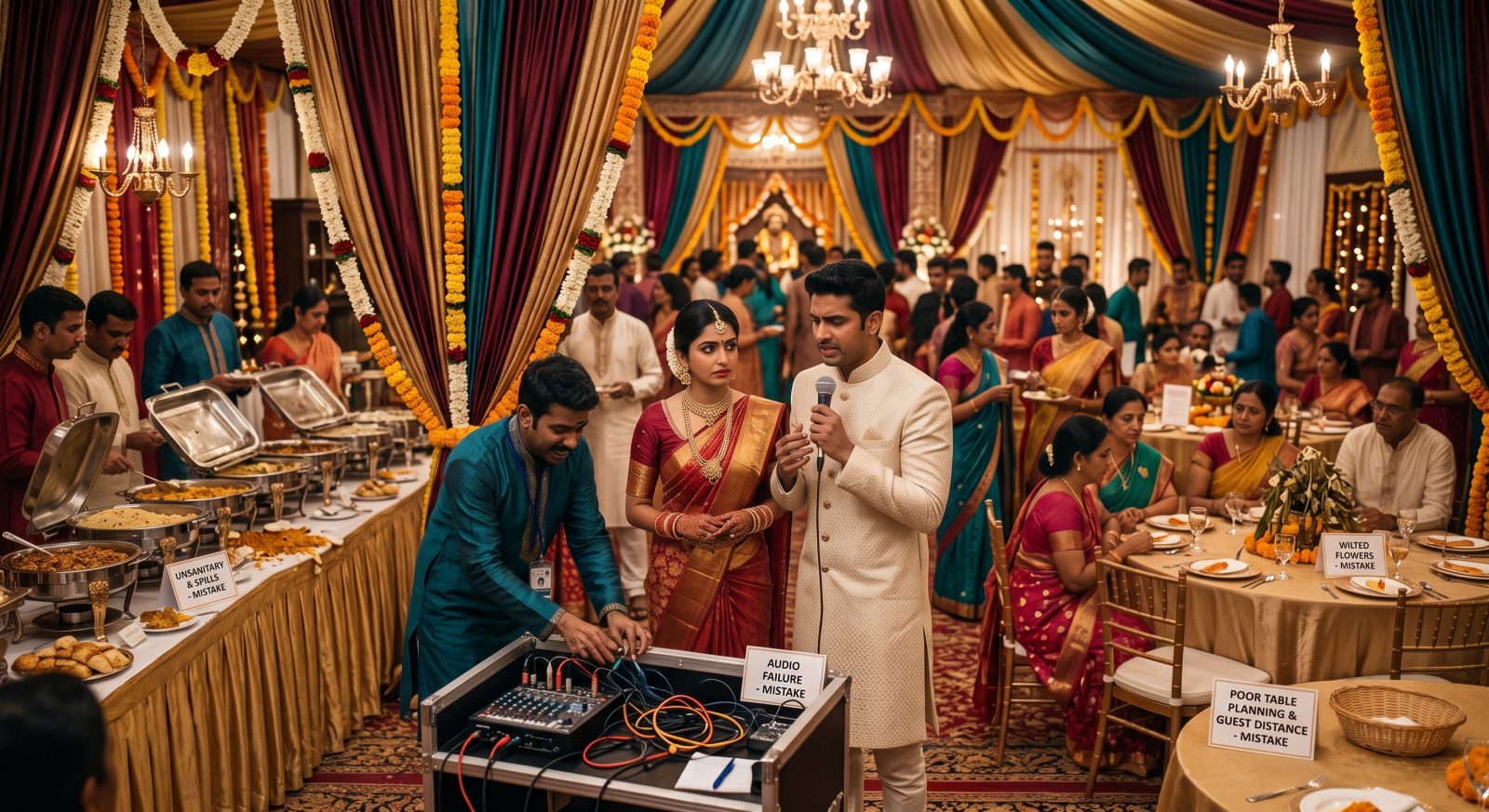
Almost every expensive reception problem traces back to a decision made before the one it depended on.
None of these are unusual. They happen because the fun decisions — decor, menus, music — are far more tempting than the dull ones, and couples reach for them first.
Resist that for about three weeks. The dull decisions take an evening each, and they protect every fun decision that follows.
Five to six months out: the room comes first
The venue is the only booking that genuinely cannot wait. Popular Bangalore halls are taken four to eight months ahead for peak muhurat dates, and the room quietly makes several decisions on your behalf.
Which is why walking a shortlist in person beats any amount of browsing. Photographs flatter rooms. They will not show you a low ceiling, a pillar in the middle of the dance floor, or a kitchen far enough from the hall that dinner arrives lukewarm.
When you are comparing reception venues in Bangalore, judge them on how the room works rather than on how many chairs fit into it. A hall that handles 250 guests smoothly will beat one that technically seats 400 and fails on flow.
On every site visit, check four things:
Then ask the two questions couples routinely forget. How long do you get for setup before the event starts? And how late can the evening run before overtime charges begin?
The answers vary far more between venues than the headline rate does.
Four to three months out: locking the vendors
With the room booked, the rest becomes straightforward you now know your capacity, your layout and your constraints.
Catering comes first, because it is the largest spend and the longest lead time:
- Ask whether outside caterers are permitted or whether the venue works only with in-house teams
- Complete a tasting before signing anything, never after
- Confirm how many live counters the kitchen can support at your guest count
- Agree the cut-off date for your final headcount, and put it in writing
Decor comes next, and only after the decorator has stood in the actual room:
- Walk the hall together so ceiling height, pillars and power points are accounted for
- Ask what the setup window is and whether it matches what the venue allows
- Confirm who clears the decor afterwards, and by when
Two months out to the final week
This stretch is about detail rather than decisions, and it is where organised couples pull ahead.
Six to eight weeks out, send the invitations. Assign one person per family to chase replies, because your final headcount drives the catering guarantee and nobody chases their own relatives efficiently.
Three to four weeks out, write the run-sheet. Put every timing in it vendor arrivals, guest entry, the couple's entry, speeches, dinner service, send-off and share it with the venue, the caterer, the decorator and the photographer. A plan that lives only in your head means four vendors working from four different assumptions.
Then in the final seven days, work through this and nothing else:
- Final headcount confirmed with the caterer
- Arrival and setup times reconfirmed with every vendor
- One contact number per vendor, shared with whoever is coordinating
- Payment schedule confirmed, including who is paying on the day itself
- Run-sheet circulated to all four key vendors
- Elders' seating and any accessibility needs communicated to the venue
Every item takes minutes. Together they are the difference between an evening that runs itself and one you spend on the phone.
Where does the money actually go?
Reception budgets are less flexible than they appear, because two categories dominate. A typical split looks roughly like this:
- Catering — 40 to 50 percent. Priced per plate, so your guest count controls it entirely.
- Venue — 15 to 25 percent. Check what the rate includes before comparing two quotes.
- Decor and florals — 10 to 15 percent. The most elastic line, and the easiest to scale late.
- Photography and video — 8 to 12 percent. The only spend you still have a year later.
- Entertainment and music — 5 to 8 percent, varying widely by format.
- Invitations and miscellaneous — 3 to 5 percent, and almost always underestimated.
Two things follow from that. Trimming the guest list saves more than trimming anything else, because catering scales directly with heads. And decor is where you should flex if you need to, since it is the only major line that can move late without renegotiating a contract.
Per-plate rates vary by venue, menu and season, so treat any figure you find online as a starting point rather than a price.
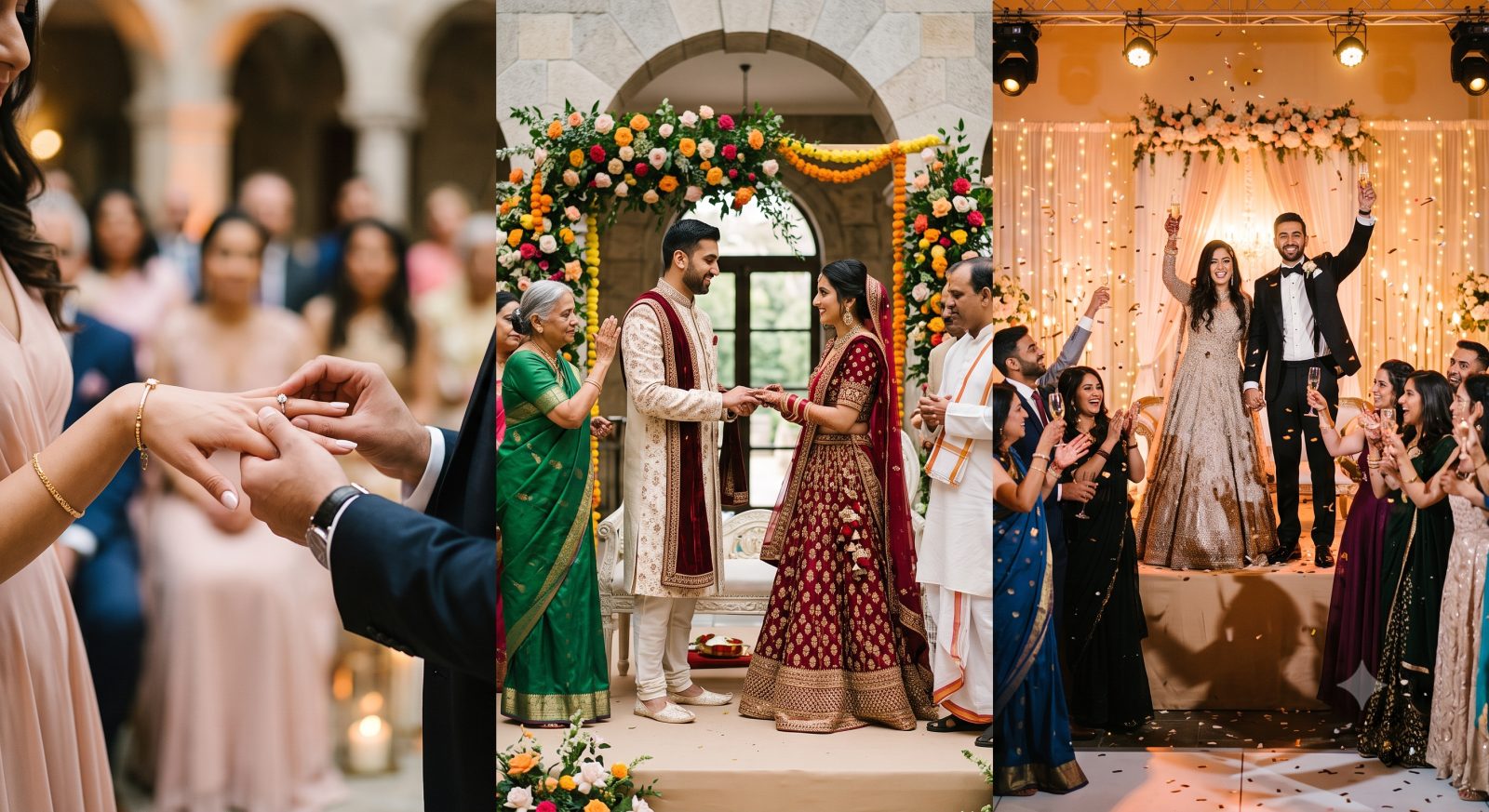
How the evening itself unfoldsMost receptions run four to five hours and follow the same shape:
- Guest arrival and seating, which takes longer than planned every single time
- The couple's entry, usually the sharpest moment of the night
- Stage greetings and photographs with guests — the longest block by far
- Speeches, the cake or ring segment, and any performances
- Dinner service, where a distant kitchen makes itself obvious
- Send-off and vendor clear-up
The block that overruns is nearly always the stage photographs. With 300 guests queuing to greet you, an hour disappears fast, so either open the queue earlier than feels necessary, or run dinner service alongside it rather than after it.
What couples forget until it is too late
Five things that rarely make it onto a checklist and reliably cause problems:
- The elders. Seating near the stage, out of the walkway, and an early dinner option if the evening runs long. Decide this before the layout is locked, not on the night.
- Vendor meals. Your photographer, decorator's team and musicians will be on site for eight hours. Agree in advance who feeds them.
- Somebody running the clock. Appoint one person a cousin, a friend, or the venue's own coordinator, whose only job is keeping the schedule moving. Without one, everything drifts.
- Directions and parking, sent with the invitation rather than left to guests. Half your late arrivals are people circling for a parking space.
- A plan for the gifts. Where they are collected, who watches them, and who takes them home at midnight.
None of these cost anything. All of them are noticed when they are missing.