Reception
Difference Between Engagement, Ring Ceremony, and Wedding Reception Explained
Ask ten Bangalore families to define an engagement, a ring ceremony, and a wedding reception, and you will get ten different answers. Some treat the first two as one event. Others insist they are separate functions held weeks apart. The reception, at least, seems easier to place, it is the big evening party after the wedding. But even that assumption misses details that matter once you start booking venues and setting a budget.
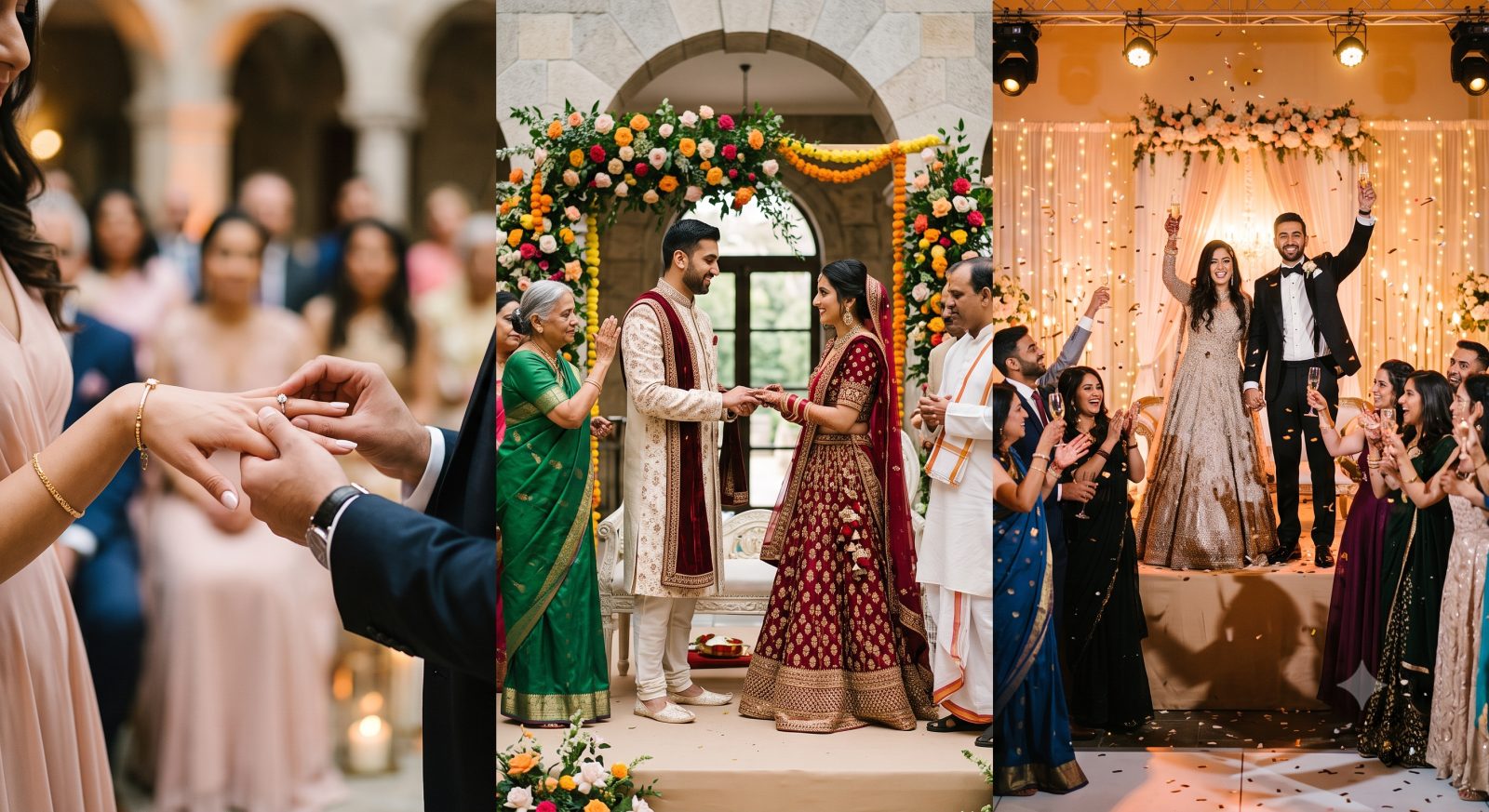
Here is the short version. An engagement is a formal commitment ceremony between two families, sometimes with a ring exchange built in. A standalone ring ceremony is a smaller, more casual version of the same thing, focused purely on the ring. A wedding reception happens after the actual marriage and exists to introduce the couple to friends, colleagues, and extended family who were not part of the wedding rituals. Same broad category, celebrating a marriage, completely different guest lists, budgets, and venue requirements.
What Is an Engagement Ceremony?
An engagement, called Nischayathartham in many South Indian households, is where both families formally agree to the marriage. Elders exchange gifts, priests read out horoscope matches, and the couple's parents make the alliance official in front of relatives. Guest counts usually run between 80 and 200, mostly close family and a handful of friends.
Food matters here. Most Bangalore families serve a full lunch or dinner, not just snacks, because the event runs three to four hours including rituals. Decor stays understated: flowers, a small mandap or stage, maybe a photo backdrop. Nobody expects a dance floor or a live band at an engagement.
What Is a Ring Ceremony?
A ring ceremony can mean two things depending on the family. For some, it is identical to the engagement, the words get used interchangeably. For others, it is a smaller, separate event held earlier, sometimes just between the couple and immediate family, purely to exchange rings before the bigger engagement or wedding rituals happen.
When it is a standalone event, guest counts drop to 30-60 people. Timing is flexible, morning, afternoon, or evening all work since there is no elaborate ritual sequence to plan around. Because of the smaller scale, many couples in areas like Hosa Road, Yelahanka, and JP Nagar choose mini halls for engagement in Bangalore instead of full-sized banquet spaces. A 40-60 seater hall costs a fraction of what a 500-guest venue runs, and it does not feel empty with a tighter guest list. Couples planning the reception separately usually start comparing wedding reception venues on capacity first, since a hall that suited 50 guests comfortably will not work for 400.
What Is a Wedding Reception?
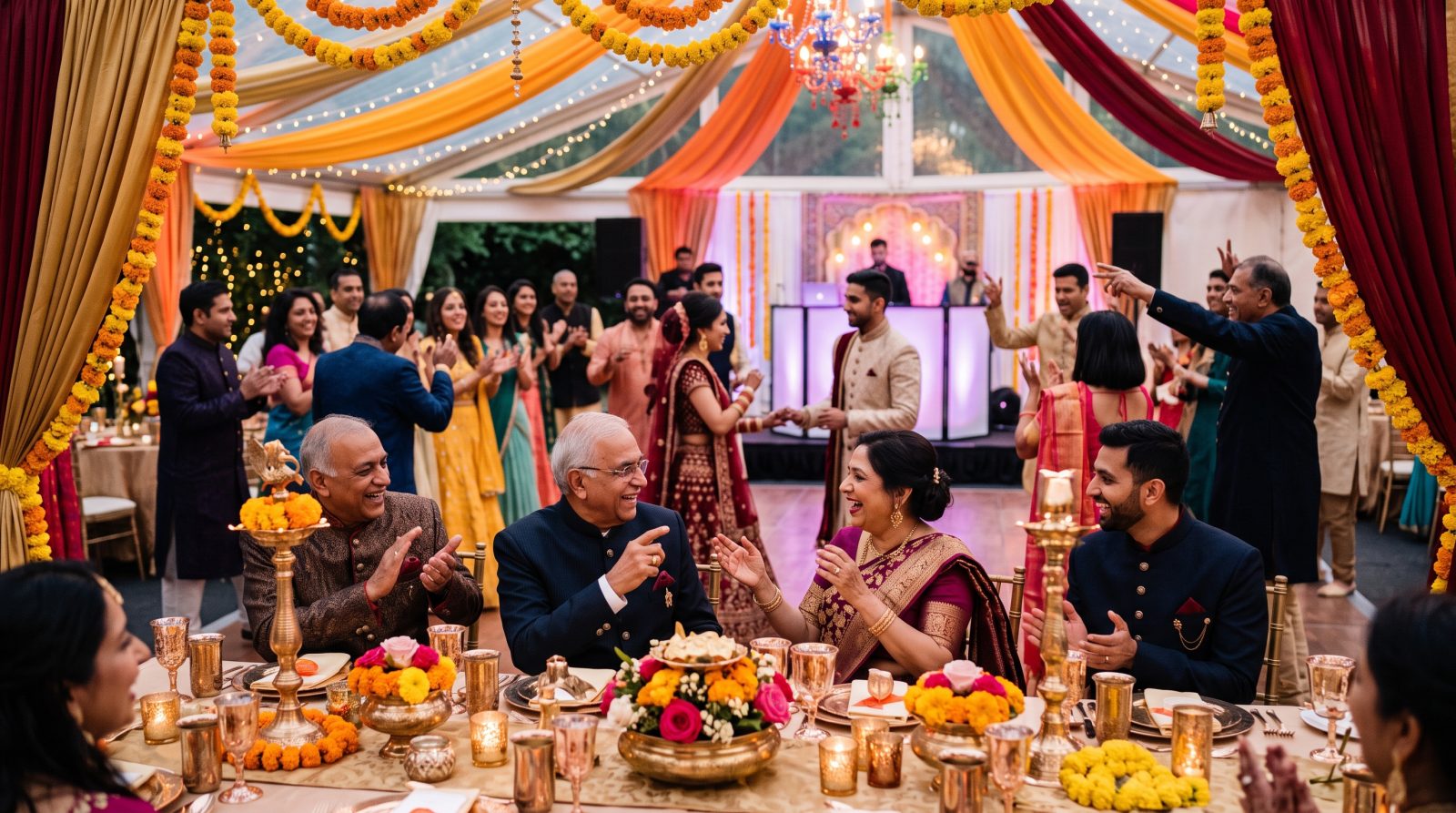
The reception comes after the actual wedding ceremony, sometimes the same evening, sometimes a day or two later. Its job differs from every other event on the calendar. It is not about rituals, it is about introducing the newly married couple to everyone who matters to the families but was not part of the core wedding rites. That includes office colleagues, distant relatives, neighbors, and old family friends.
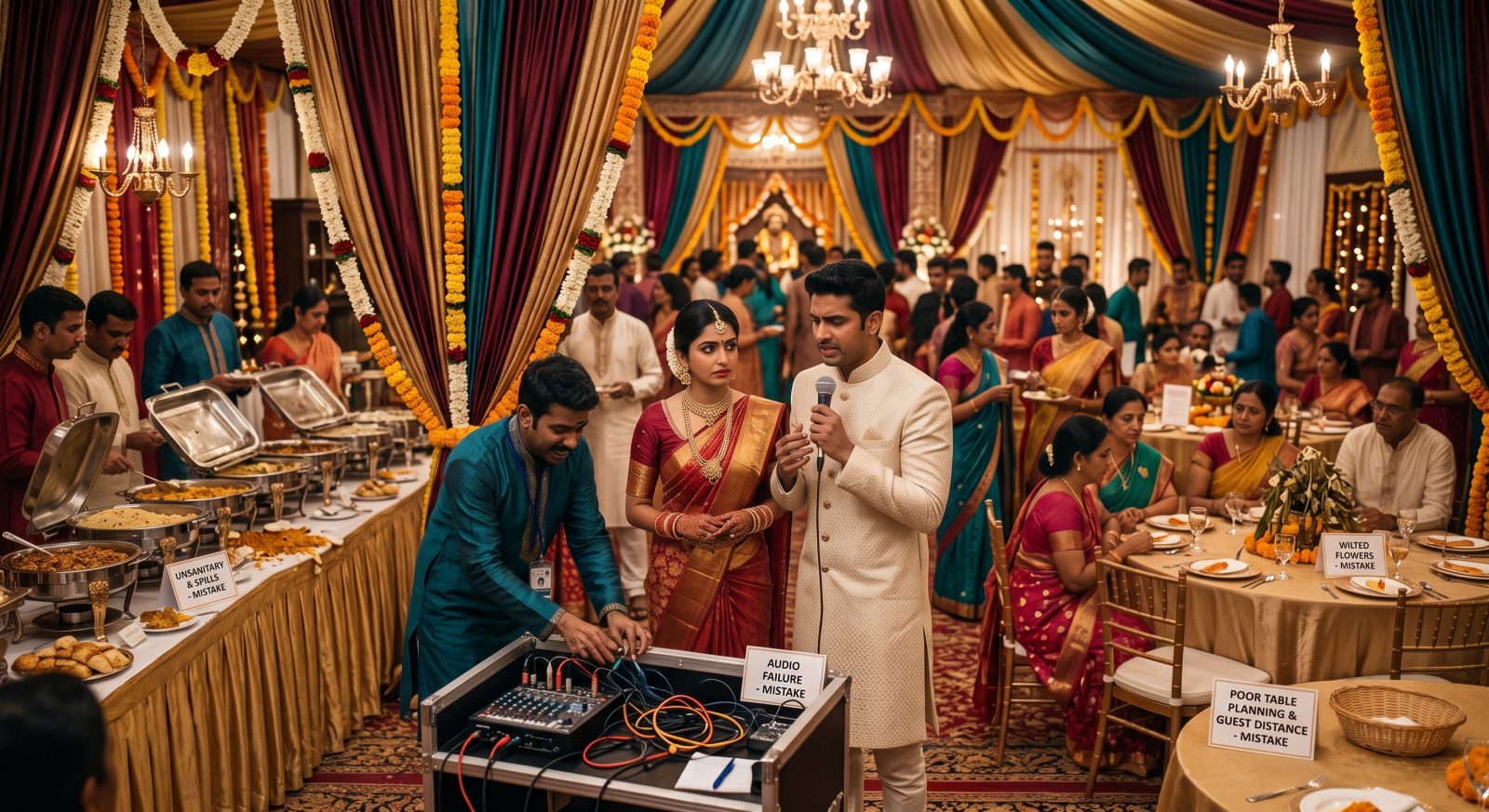
Guest lists for Bangalore receptions typically run from 300 to 800, sometimes higher for families with wide social circles. The scale changes the requirements too: stage decor gets elaborate, photography and videography teams expand, and most venues need a proper welcome area, a large dining hall, and parking for a few hundred cars. Reception budgets in Bangalore commonly range from 8 lakh to 25 lakh rupees depending on guest count, catering style, and decor complexity, well above what an engagement or ring ceremony typically costs.
The Practical Differences That Actually Matter
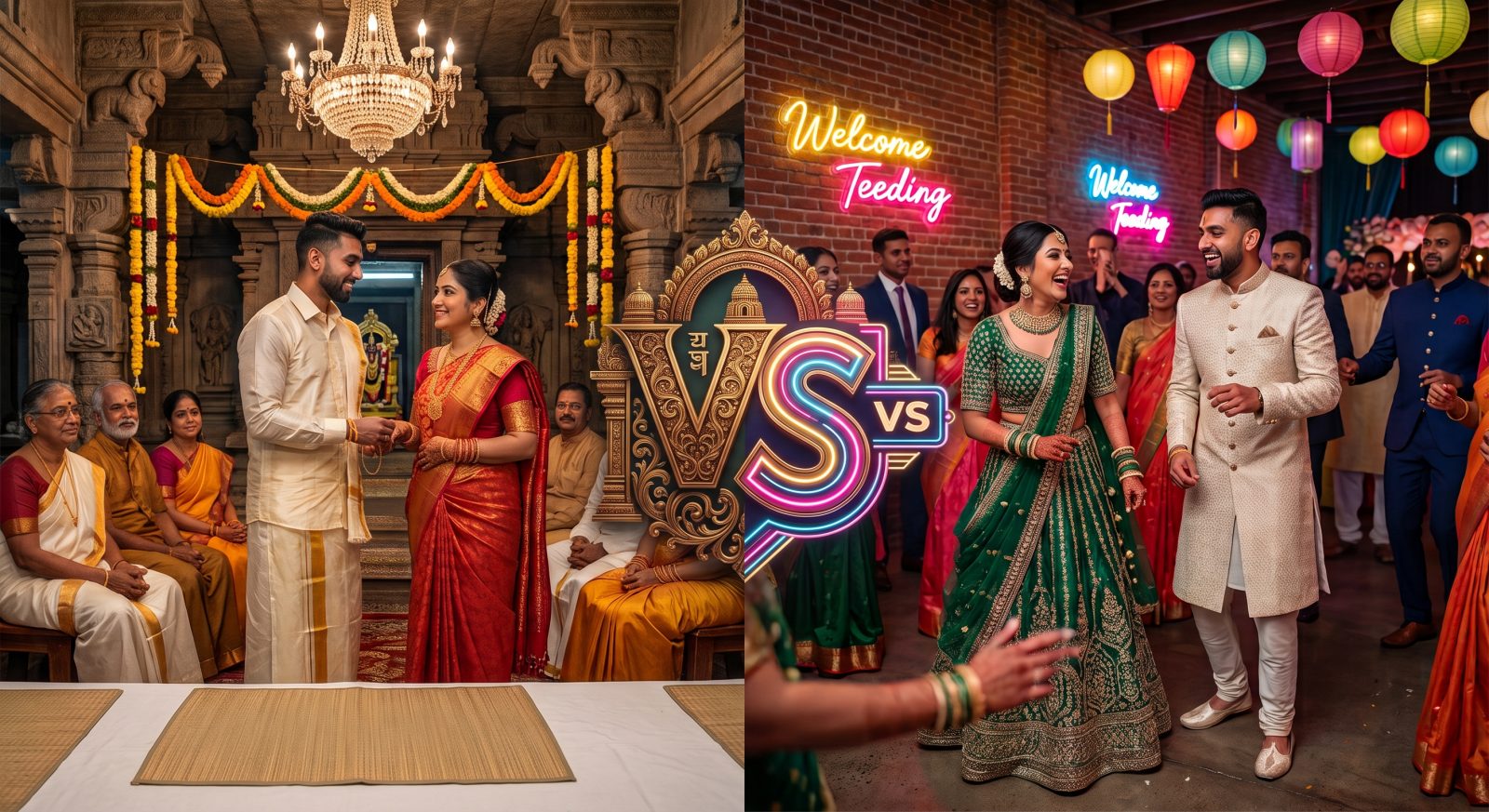
Ritual involvement separates these three events clearly. Engagement and ring ceremony both include some ritual element, horoscope matching, ring exchange, family blessings. A reception has none of that. It is hospitality first: welcome the couple, feed the guests, take photos, let people congratulate the families in person.
Timing follows a pattern too. Engagements and ring ceremonies often happen during the day, aligned with auspicious muhurat timings that priests recommend. Receptions almost always run in the evening, after 6 or 7 PM, because that is when working guests can actually attend.
Dress code shifts as well. Engagement outfits lean traditional: silk sarees, sherwanis, family jewelry passed down for generations. Reception outfits, especially for younger Bangalore couples, often go one of two ways. A second traditional look in a different color, or a contemporary gown and suit combination for the evening.
Catering follows the same split. Engagement and ring ceremony menus tend to stick to regional South Indian spreads, sometimes purely vegetarian depending on the family. Receptions usually add live counters, multi-cuisine buffets, and a dessert station, because the guest list is broader and the event runs longer into the night.
Booking Timelines Differ Too
Venue availability during peak wedding season, roughly November through February, gets tight for all three events, but receptions fill up first. A 400-500 guest hall on a good muhurat date in Bangalore can book out six to eight months in advance, while a smaller engagement or ring ceremony hall has more flexibility since the guest count and space requirement are lower. Families planning a full wedding season, engagement in one month, wedding and reception a few weeks later, generally lock the reception venue first and work backward from there.
Frequently Asked Questions
Is an engagement the same as a ring ceremony?
Not always. Some families use the terms interchangeably for one combined event. Others hold a smaller, separate ring exchange before the formal engagement with elders and rituals.
How many guests should we plan for each event?
Engagements typically host 80-200 guests, standalone ring ceremonies 30-60, and wedding receptions 300-800, depending on family size and social circle.
Can the ring ceremony and engagement happen on the same day?
Yes, and most Bangalore families combine them into a single function to save on venue costs and guest coordination.
Do we need different venues for each function?
Not necessarily, but the capacity requirements differ enough that a hall sized for an engagement often feels wrong for a reception. Matching venue size to guest count matters more than matching venue type.