Reception
Traditional vs Modern Wedding Receptions: Which One Suits You Best?
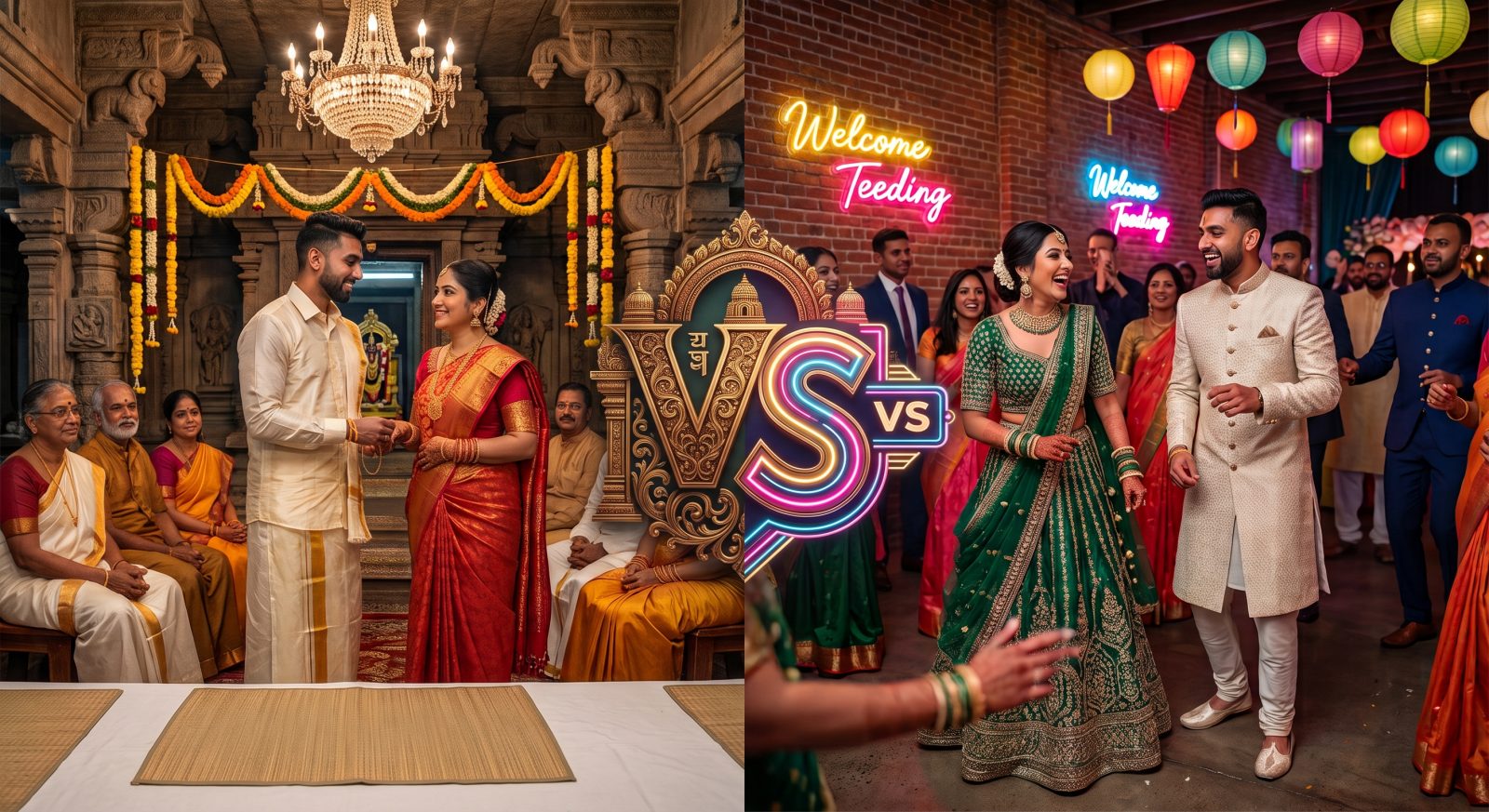
If you're stuck between your mother's vision of a grand traditional reception and your own idea of a chic, curated evening, you're not alone. Most couples planning a wedding today face this exact question. The short answer: a traditional reception suits you if your family values rituals, community bonding, and a larger guest list, while a modern reception suits you if you want flexibility, a shorter timeline, and a personalized experience. Increasingly, couples aren't choosing sides at all, they're blending both into one reception that honors family expectations while still feeling like their own.
What Makes a Reception "Traditional"?
A traditional South Indian wedding reception is built around continuity. It follows a set sequence, a formal welcome for the couple, blessings from elders, seating arranged by family hierarchy, and a menu that reflects regional cuisine served in courses. Live nadaswaram or classical instrumental music often plays through the evening, and the couple is dressed in traditional silks, with the bride typically in Kanjeevaram and the groom in veshti-angavastram or a matching silk set.
Guest lists tend to be large, often crossing 500 to 800 people, because the reception doubles as a community event where the families formally introduce the newly married couple to relatives, colleagues, and friends. Photography here focuses on capturing family groupings and ritual moments rather than candid, editorial-style shots.
What Does a Modern Reception Look Like?
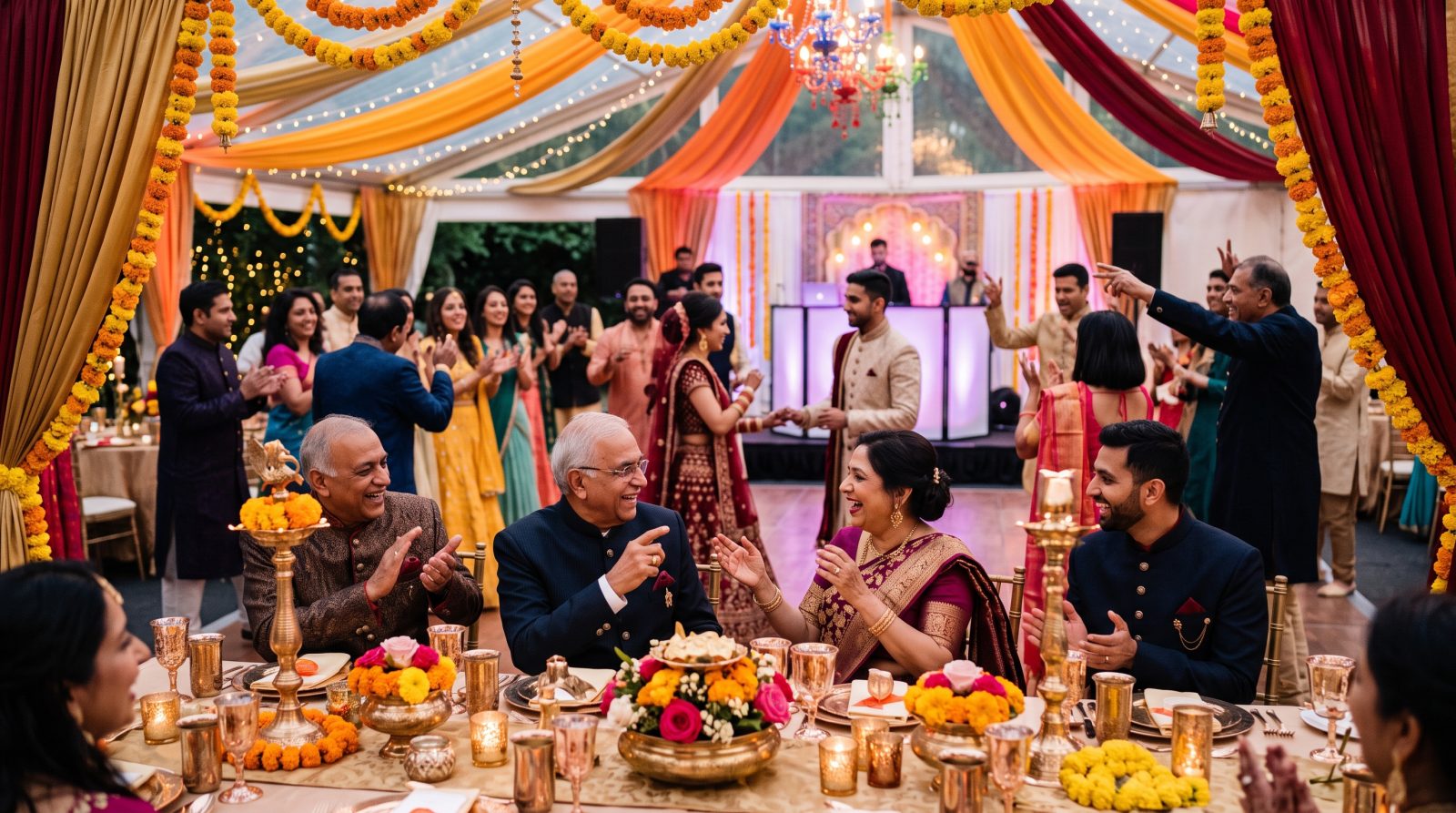
A modern reception, by contrast, is designed around experience. Think curated colour palettes, statement lighting, a DJ or live band, personalised welcome drinks, and photo booths. The guest list is usually smaller and more intentional, close family and friends rather than every extended relative. Menus lean towards live counters, fusion cuisine, and interactive food stations instead of a fixed multi-course meal.
The format is shorter too, often a three to four hour cocktail-style evening instead of a full-day affair. Couples choosing this route usually want the reception to reflect their personal story: how they met, shared interests, even a joint hobby reflected in the décor theme. Photography and videography lean cinematic, built for reels and albums that feel personal rather than formal.
Choosing the Right Venue for Your Reception Style
Your venue decision plays a bigger role in this choice than most couples expect. A hall with high ceilings, an open floor plan, and flexible lighting rigs supports a modern, theme-driven setup far more easily than a space designed for fixed banquet seating. If you're comparing reception venues in Bangalore, it's worth checking two things upfront: whether the hall permits traditional elements like a mandap or a small havan area if you want ritual continuity, and whether it has the electrical and ceiling infrastructure for modern lighting and AV setups. The best venues in the city are built to flex between both formats without one style compromising the other.
Traditional vs Modern: The Real Differences
Beyond aesthetics, the two formats differ in ways that affect your planning timeline and budget. Traditional receptions need longer lead times because of larger guest coordination, priest or ritual scheduling, and catering for higher covers. Modern receptions move faster to plan but often cost more per guest because of styling, entertainment, and curated menus. Traditional formats spend more on catering volume and less on décor; modern formats invert that ratio. Guest experience also differs, traditional receptions prioritise respect and recognition for elders, while modern receptions prioritise engagement and entertainment for the couple's peer group.
Which One Actually Suits You?
Ask yourself four questions before deciding. First, whose expectations matter most in this decision yours, or both families'? Second, what's your realistic guest count, and does it match one format better than the other? Third, how much of the day do you want dedicated to rituals versus personal expression? Fourth, what's your budget ceiling, and which format uses it more efficiently for your priorities?
If both families are traditional and guest lists are large, fighting that current usually costs more in family friction than it saves in styling budget. If you and your partner want an evening that feels distinctly yours, a modern format even a scaled-down one tends to deliver more satisfaction per rupee spent.
Can You Combine Both?
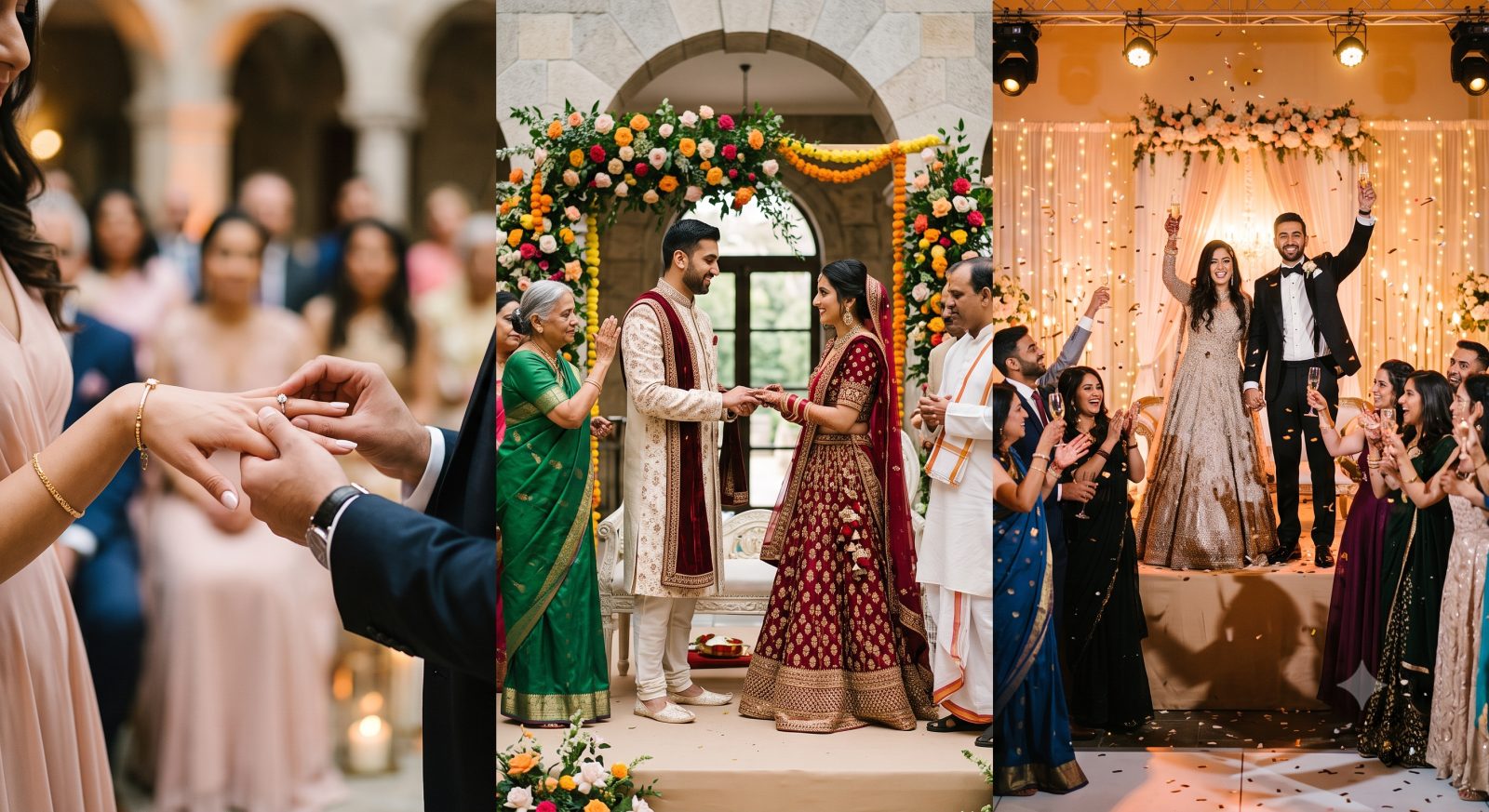
Yes, and this is increasingly the most popular choice among couples we work with. A common structure is a traditional daytime ceremony with full rituals, followed by a modern evening reception with a DJ, curated décor, and a shorter, more relaxed guest experience. This lets you honor family traditions during the ceremony while giving yourselves the personalized evening you actually want to remember. Fusion receptions also let you split guest lists sensibly a larger daytime crowd for the ceremony, and a curated evening list for the celebration.
Frequently Asked Questions
Is a traditional or modern wedding reception more expensive?
It depends on guest count and choices. Traditional receptions often cost more in total due to larger guest numbers, while modern receptions can cost more per guest due to styling and entertainment.
Can a traditional reception include modern entertainment like a DJ?
Yes. Many couples add a DJ set or live band after the formal rituals and dinner service are complete, without changing the traditional structure of the event.
How many guests typically attend each format?
Traditional South Indian receptions commonly host 500 or more guests, while modern receptions are usually planned for 150 to 300 close family and friends.
What is a fusion wedding reception?
A fusion reception combines a traditional ceremony or ritual segment with a modern, curated evening celebration giving couples both family continuity and personal expression in one event.
How far in advance should I book my reception venue?
For large traditional receptions, book at least six to nine months ahead, especially around auspicious wedding dates. Modern, smaller-format receptions can sometimes be planned in three to four months.