Wedding
Wedding Etiquette Every Couple and Guest Should Know
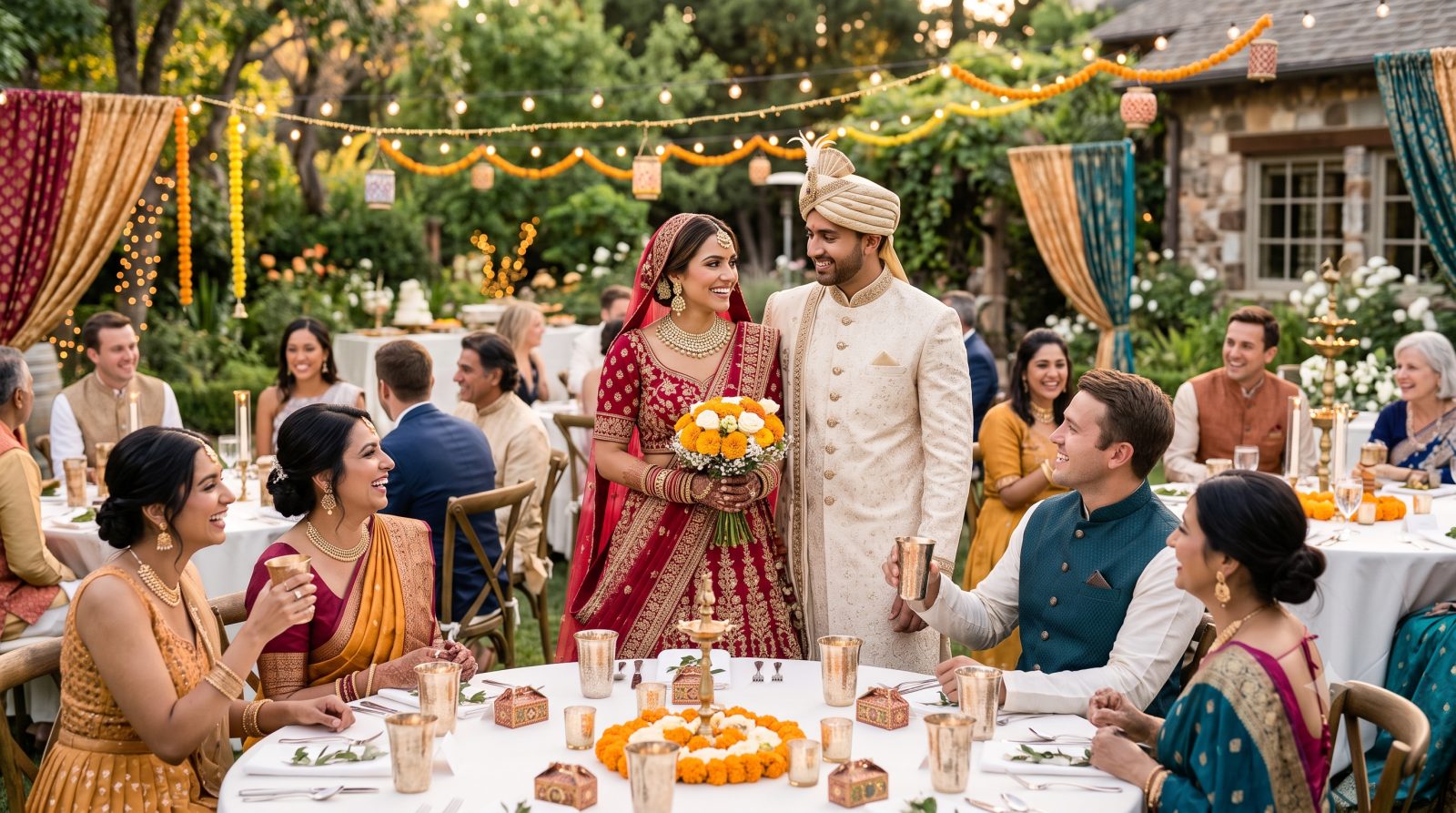
Wedding etiquette is the set of shared expectations that keeps a wedding running without anyone feeling slighted. For the couple it covers who gets invited, how they are told, and how they are thanked afterwards. For guests it covers replying on time, arriving dressed correctly, and knowing when to put the phone down. Most etiquette failures are not rudeness. They are people guessing, because nobody told them the rule.
Here is what both sides are actually expected to do, from the first save-the-date to the last thank-you note.
The six rules that cause the most trouble when broken
If you read nothing else, read these.
- Reply to the invitation within a week, and never after the printed RSVP date.
- The names on the envelope are the people invited. Nobody else.
- Arrive 15 to 20 minutes before the printed start time, not at it.
- Do not stand in the aisle with a phone during the ceremony.
- Give the gift you can afford, not the one you think the venue demands.
- Thank every guest who gave something, within three months, in writing.
Invitations: who to invite, and when to send
Save-the-dates go out six to eight months ahead if guests need to travel or book leave. The formal invitation follows six to eight weeks before the date, with the RSVP deadline printed on it.
In most Indian families the guest list is negotiated rather than decided. Both sets of parents will claim a share of the seats, and relatives will be added late. Settle that split early and put the numbers in writing, because a list that reopens three weeks before the muhurat is where budgets break.
Address the invitation to exactly the people invited. Two names on the envelope means two seats. "And family" means the household. A name that is not on the card does not have a seat, and that includes children. If you are the guest, do not read an invitation generously. Read it literally.
How long do guests have to RSVP?
Reply within a week of receiving the invitation, and never later than the date on the card. Venues bill on a confirmed headcount that is usually locked between three and seven days before the event. A late yes costs the couple a plate they did not budget for. A late no wastes one they already paid for.
If you are genuinely unsure, decline. Attending a wedding you declined is worse than skipping one you were invited to. And do not ask for a plus-one that was not offered, or bring one quietly and hope the seating chart absorbs it. It will not.
Dress codes, decoded
Dress code confusion is the most common guest anxiety, and it is entirely fixable by the couple writing one clear line on the invitation. Here is what the usual instructions mean in practice.
Traditional Indian asks men for a kurta with churidar or pyjama, moving up to a bandhgala or sherwani on the wedding day itself, and asks women for a saree, a lehenga or a heavy salwar suit, with jewellery expected rather than optional. Indo-western is looser. A bandhgala jacket with trousers or a shirt with a Nehru collar covers it for men, and a gown, a palazzo set or a saree draped in a modern style covers it for women. Formal or black tie is literal: a dark suit or tuxedo with closed shoes and a tie, or a floor-length gown or formal saree.
Daytime functions run on different logic. For a mehendi or haldi, men wear light cotton or linen kurtas and colour is welcome, while women are better off in a light lehenga or a cotton suit with minimal jewellery and hair tied back, because turmeric and wet mehendi ruin heavy fabric. And if the card requests a specific colour, wear it. The request exists for the photographs. Check only whether the bride is wearing that colour too.
Two rules survive across every community. Do not wear white to a Christian wedding, and do not wear an outfit that competes with the bride's, which in most Hindu ceremonies means avoiding heavy red. Black is fine at urban Bangalore receptions and still frowned on in conservative families. When in doubt, ask a cousin from the host side, not the internet.
Gifts: how much, and when to hand them over
Cash in an envelope is standard at Indian weddings, and the amount conventionally ends in one. Sums like 1,001 or 5,101 mark the gift as a beginning rather than a closed figure. Give what your relationship and your budget support. The scale of the venue is not a price list.
Physical gifts and registry items should reach the couple's home before the wedding, not the reception hall, where somebody has to guard a table of boxes all evening. If you are close to the family and cannot attend, send the gift anyway. If you are not close, a message on the day is enough and nobody is counting.
The venue quietly sets half the rules
Etiquette is not only about people. It is about the building. A hall with valet parking and a covered banquet floor runs differently from an open lawn where the mandap sits 200 metres from the nearest washroom. Guests should read the invitation for entry and parking instructions and follow them, because venues enforce timings that the couple cannot override on the night.
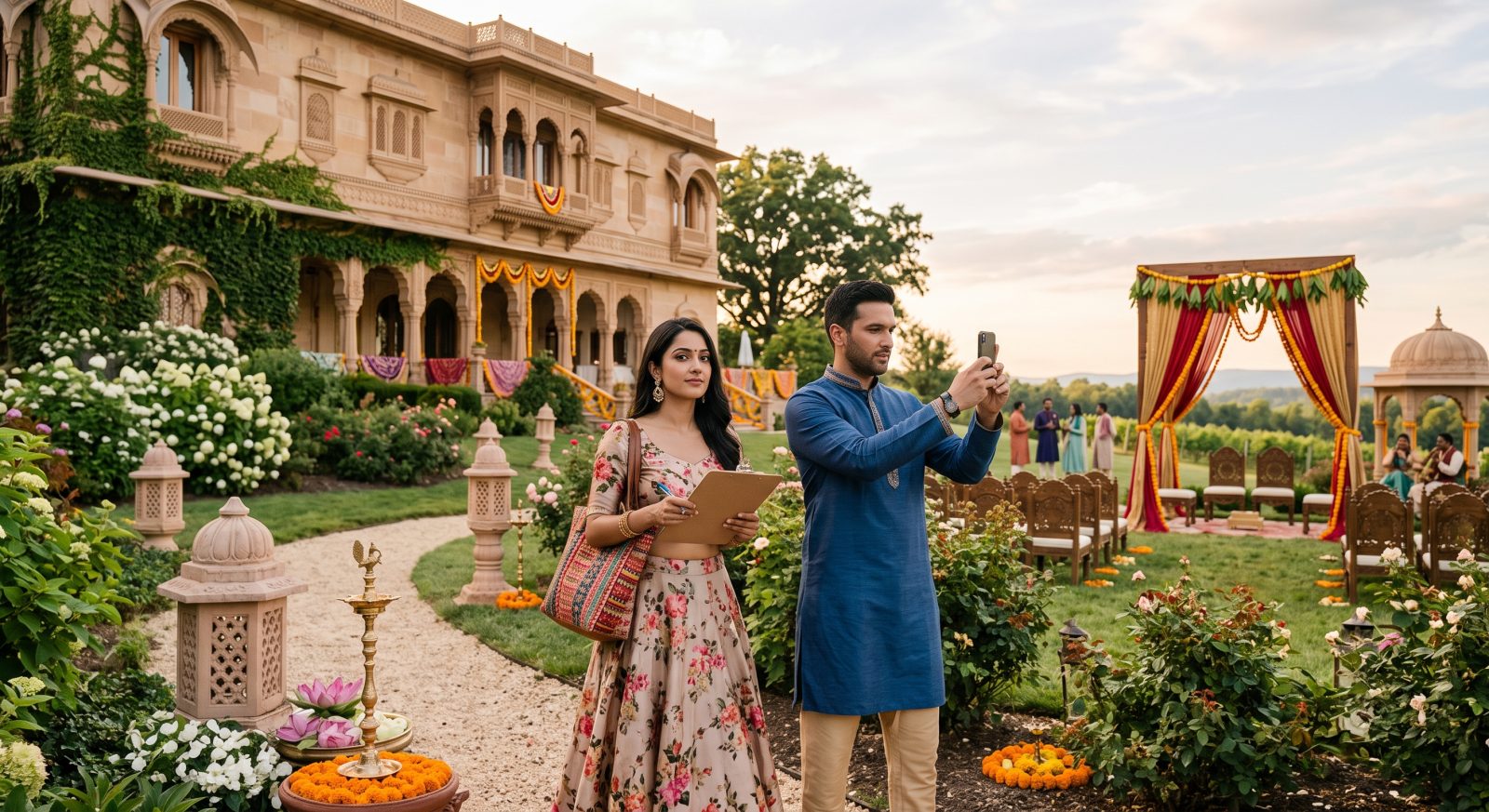
For couples, this is the decision that shapes guest experience more than the decor ever will. When you compare wedding places in Bangalore, look past the photographs at what each venue actually lets your guests do: how many cars fit before the overflow starts, whether elderly relatives can reach the mandap without stairs, what time the kitchen stops serving, and how late the music is allowed to run. Those four answers produce more guest complaints than anything on the mood board.
Ask for the venue's rules in writing, then print the ones that affect guests on the invitation or the wedding page. People follow instructions they are given. They improvise when they are not, and improvisation at a 400-guest wedding looks like forty cars parked across a residential road.
Ceremony etiquette for guests
Arrive 15 to 20 minutes early. Indian ceremonies are timed to a muhurat, a fixed auspicious window, and that window does not wait for traffic on Hosur Road. If you do arrive late, wait at the back until a natural pause. Do not cross the aisle or walk past the mandap mid-ritual.
Put the phone on silent and leave it there. The couple hired a photographer. An arm holding a phone into the aisle puts your elbow in every professional frame and your face in the album. If the family has asked for an unplugged ceremony, that request is not a suggestion.
Leave the front rows alone. They belong to immediate family and grandparents whether or not somebody has taped a card to them. And stay for the full ceremony if you came for it. Slipping out after the varmala to get to the buffet first is noticed, every time.
Reception etiquette, from the stage to the exit
Greet the couple early. The receiving line or the stage photo exists so that every guest gets roughly 30 seconds. Take yours, say something warm, and move. A five-minute catch-up while 80 people queue behind you is the most common reception bottleneck there is.
If you are giving a speech, keep it to three minutes and write it down. No inside jokes that shut out most of the room, no stories about anyone's ex, no roasting the couple in front of their new in-laws. Read it aloud once before the day and cut the third anecdote.
Do not move place cards. Seating charts exist because someone spent an evening keeping two feuding uncles four tables apart. Eat before you drink. And leave near the venue's closing time rather than an hour past it, because the staff clearing your table have to get home too.
What the couple owes their guests
Guest etiquette collapses when the couple leaves people guessing. The hosting side has its own list.
- Answer the questions before they are asked. Dress code, start time, parking, directions and the end time all belong on the invitation or a one-page wedding site.
- Feed people. Any ceremony running past 90 minutes needs water and something small available, especially for older guests and children.
- Say no early and kindly. "We are capped at 250 and could not include everyone" is a complete answer. You do not owe a justification.
- Thank every gift within three months. Handwritten if it was handed to you in person. A group message is an announcement, not a thank-you.
- Pay your vendors on the agreed date. Photographers, decorators and caterers talk to each other, and a reputation for slow payment follows a family through a city.
Frequently asked wedding etiquette questions
Is it rude to decline a wedding invitation?
No. Declining early is polite, because it frees a paid seat. What is rude is silence. Reply either way, within a week, and add one warm line rather than a bare no.
How much should you spend on a wedding gift?
Spend what your relationship and budget support, not what the venue suggests. Colleagues and acquaintances give modestly, close friends and relatives give more. At Indian weddings, cash amounts conventionally end in one, such as 1,001 or 2,101.
Can you wear black to an Indian wedding?
At most urban receptions in Bangalore, yes. At traditional ceremonies and in conservative families, black is still considered inauspicious. If the invitation does not specify a dress code, ask someone from the host family before you buy the outfit.
What time should guests arrive at a wedding?
Fifteen to twenty minutes before the printed start time. Ceremonies tied to a muhurat begin on the minute regardless of who has arrived, so treat the printed time as the moment you should already be seated.
Do you have to give a plus-one to every guest?
No. Plus-ones are usually extended to married, engaged and long-term partners, and to guests who will not know anyone else in the room. Apply the rule consistently across the list, because inconsistency is what causes offence, not the rule itself.