Engagement
Engagement Ceremony Etiquette: Who Does What and What to Expect
An engagement ceremony has more moving parts than most people expect until they're the ones planning one. Who hosts, who pays, who speaks first, when the rings actually come out, these questions have fairly settled answers in most Indian family traditions, and knowing them in advance is what keeps the day from turning into forty relatives standing around asking each other what happens next.
This guide walks through the etiquette that actually gets used not the version in old wedding manuals, but the one families follow today, including where things bend depending on region, community, and how formal the two families want the event to be.
Who Hosts the Engagement Ceremony?
Traditionally, the bride's family hosts the engagement, since the ceremony is built around the groom's family arriving to formally ask for the bride's hand and exchange gifts. That said, this has loosened considerably. In many families now:
- Both families split hosting duties and costs evenly, especially when the ceremony has moved from someone's home to a rented venue
- The groom's family hosts if the bride's family lives out of town or has limited space
- Couples host their own engagement independently of either family, particularly for a second ceremony or a smaller pre-wedding gathering
There's no etiquette violation in any of these arrangements. The only real rule is that whoever hosts should communicate that clearly and early, so the other family isn't guessing whether to bring gifts, show up with elders in tow, or arrange their own transport.
The Order of Events, Start to Finish
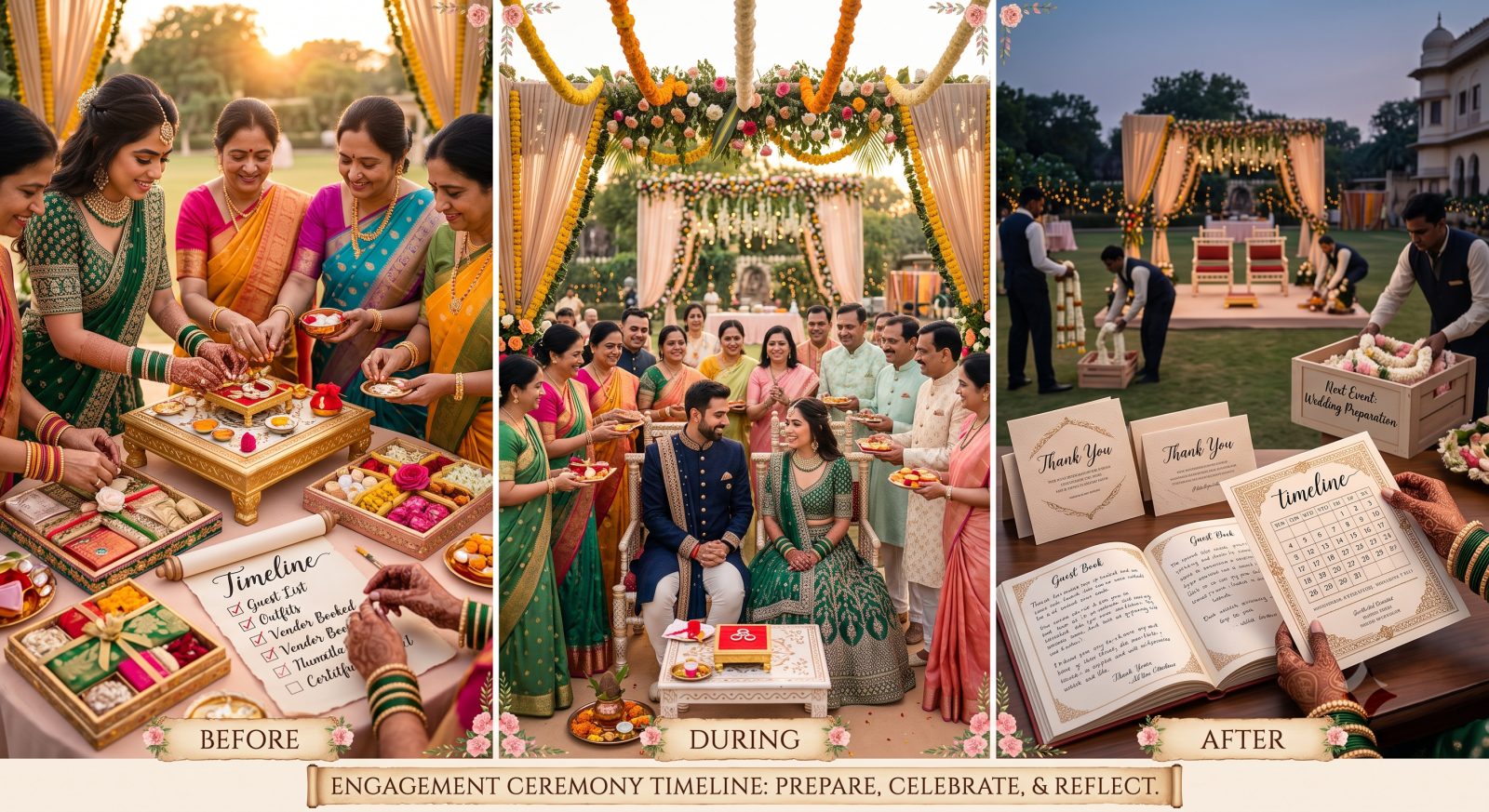
Most engagement ceremonies, regardless of scale, move through the same rough sequence:
- Arrival and welcome, where the hosting family greets guests and seats elders first
- A short round of introductions if the families haven't formally met before
- The formal proposal or request, often a few words from an elder on the groom's side
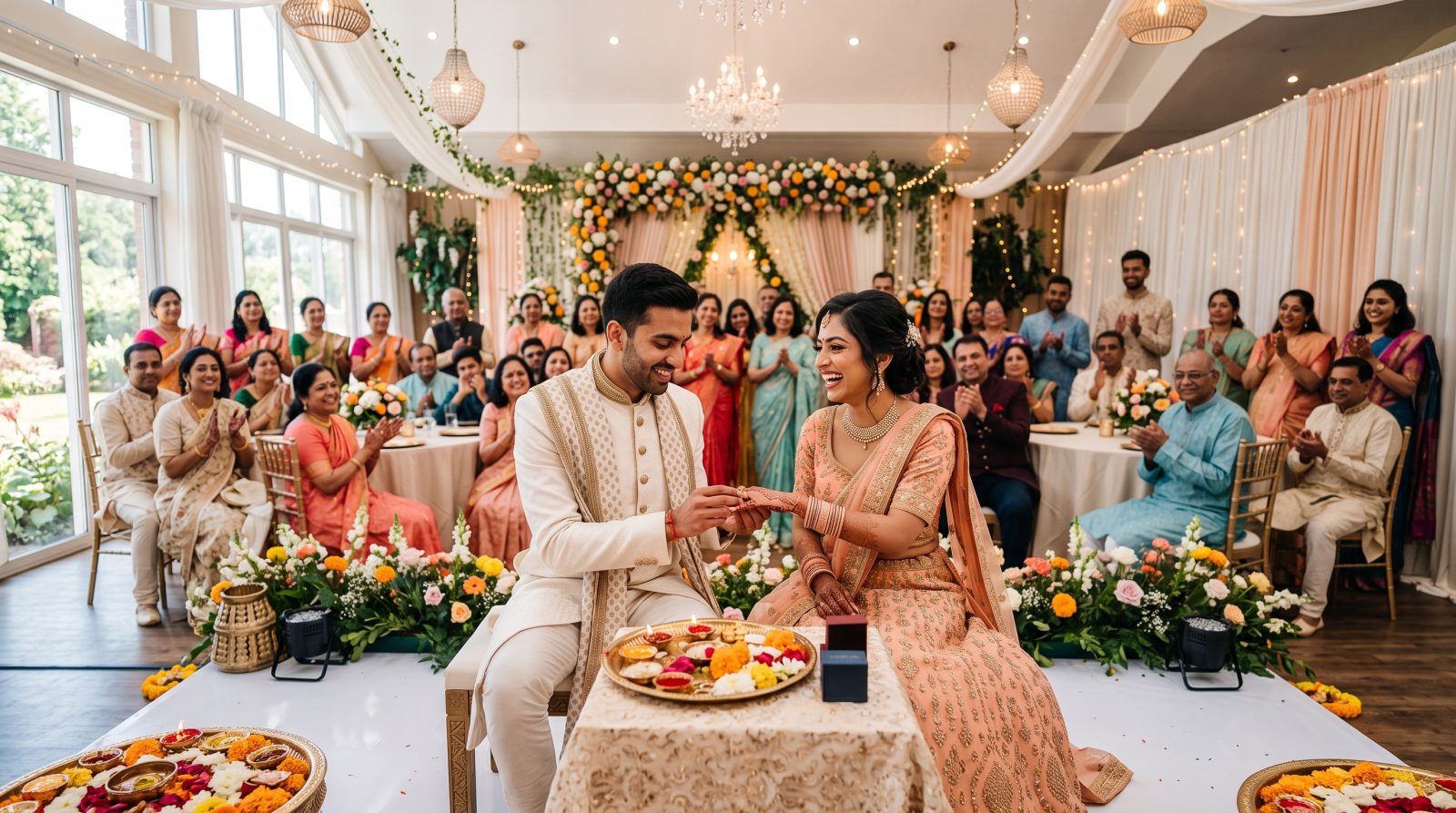
- The ring exchange, which is the visual centerpiece most guests are actually there for
- Blessings from both sets of parents and grandparents
- Gift exchange between families
- A shared meal or refreshments to close the event
Ceremonies that skip straight from arrival to ring exchange tend to feel rushed, and older relatives in particular notice when the blessing step gets shortened for time. If the schedule is tight, trim the meal service window before cutting the blessing.
What's Expected of the Bride's Family
- Confirm the guest list and seating priority for elders well before the date
- Arrange the ring for the groom, if the tradition includes a ring for both partners
- Prepare a small gift or sweets for the groom's family to take home
- Brief close relatives on their speaking roles ahead of time, so nobody is caught off guard when asked to say a few words
What's Expected of the Groom's Family
- Bring the ring for the bride, along with any traditional gifts specific to the community
- Send an early headcount so the host family can plan seating and catering accurately
- Assign one elder to make the formal request or opening remarks
- Arrive with enough buffer time to account for city traffic, especially if the venue is across town from where the family is coming from
How Formal Should the Dress Code Be?
This depends entirely on how the families have framed the event. A living-room engagement between two families who already know each other well can stay in smart-casual territory. A larger ceremony with fifty or more guests, held at a proper venue, usually calls for the same formality as a wedding reception not full bridal wear, but structured, photograph-ready outfits for the couple and close family.
The safest rule for guests: match what the invitation implies, and when in doubt, dress slightly more formal rather than less. Nobody has ever been criticized for being marginally overdressed at an engagement.
Gift Etiquette Between Families
Gift-giving at engagements runs on reciprocity, not generosity contests. The core exchanges are:
- Rings, exchanged between the couple, which is the ceremony's central moment
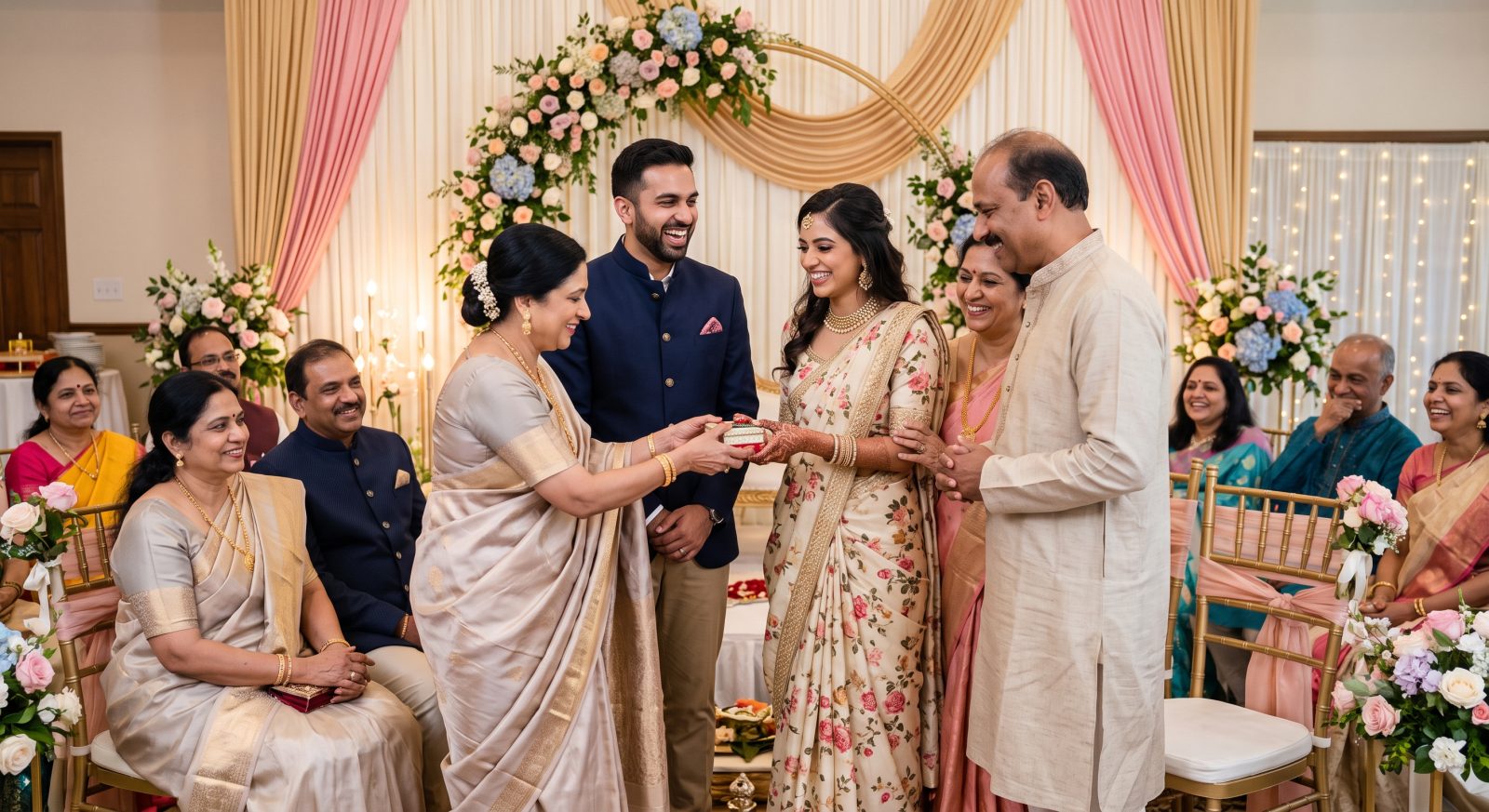
- A gift from each family to the other, often sweets, clothing, or a symbolic item tied to the community's traditions
- Small tokens or return gifts for guests who traveled a distance to attend, which is optional but appreciated
What matters more than the value of any single gift is that both families give something comparable. A lopsided exchange, where one family arrives with elaborate gifts and the other with none, tends to be remembered long after the ceremony itself is forgotten.
Venue choice affects a surprising amount of this etiquette in practice. Families increasingly prefer holding the ceremony away from a home entirely, and the shift toward dedicated engagement halls in bangalore reflects how much easier it is to manage elder seating, staggered gift exchanges, and catering timing in a space actually built for this function, rather than squeezing seventy guests and three separate rituals into a living room that was never meant to hold them.
Speeches and Toasts: Who Speaks and When
The formal request at the start is usually made by one elder from the groom's side, and a brief response comes from an elder on the bride's side. After the ring exchange, it's common for one parent from each side to say a few words, followed by an optional toast from a sibling or close friend of the couple if the event has shifted toward a more Western-style celebration.
Two things trip families up here: nobody clarifying in advance who's speaking, and speeches that run long enough to eat into the meal service. Keep each round of remarks under three minutes, and confirm speakers a day ahead rather than asking someone to improvise on the spot.
Photography Etiquette
The ring exchange, the blessing moment, and the family photo afterward are the three shots almost every family wants documented properly, and it's worth briefing the photographer on this order specifically rather than leaving it to chance. Beyond that:
- Ask elders before seating them for formal photos, since some prefer not to stand for extended periods
- Keep phone photography from guests to a minimum during the actual ring exchange, so it doesn't block the photographer's angle
- Decide in advance whether candid coverage of the meal and mingling is wanted, since some families prefer to keep that portion private
Common Etiquette Mistakes Families Make
- Not confirming who's hosting until a few days before, which leaves the other family unsure what to bring or wear
- Skipping the formal introduction round when families haven't met, which makes the rest of the ceremony feel stiff
- Letting the ring exchange happen before all the important guests have arrived
- Cutting the blessing ritual short to save time, which is usually the moment elders remember most
What Changes Between Communities and Regions
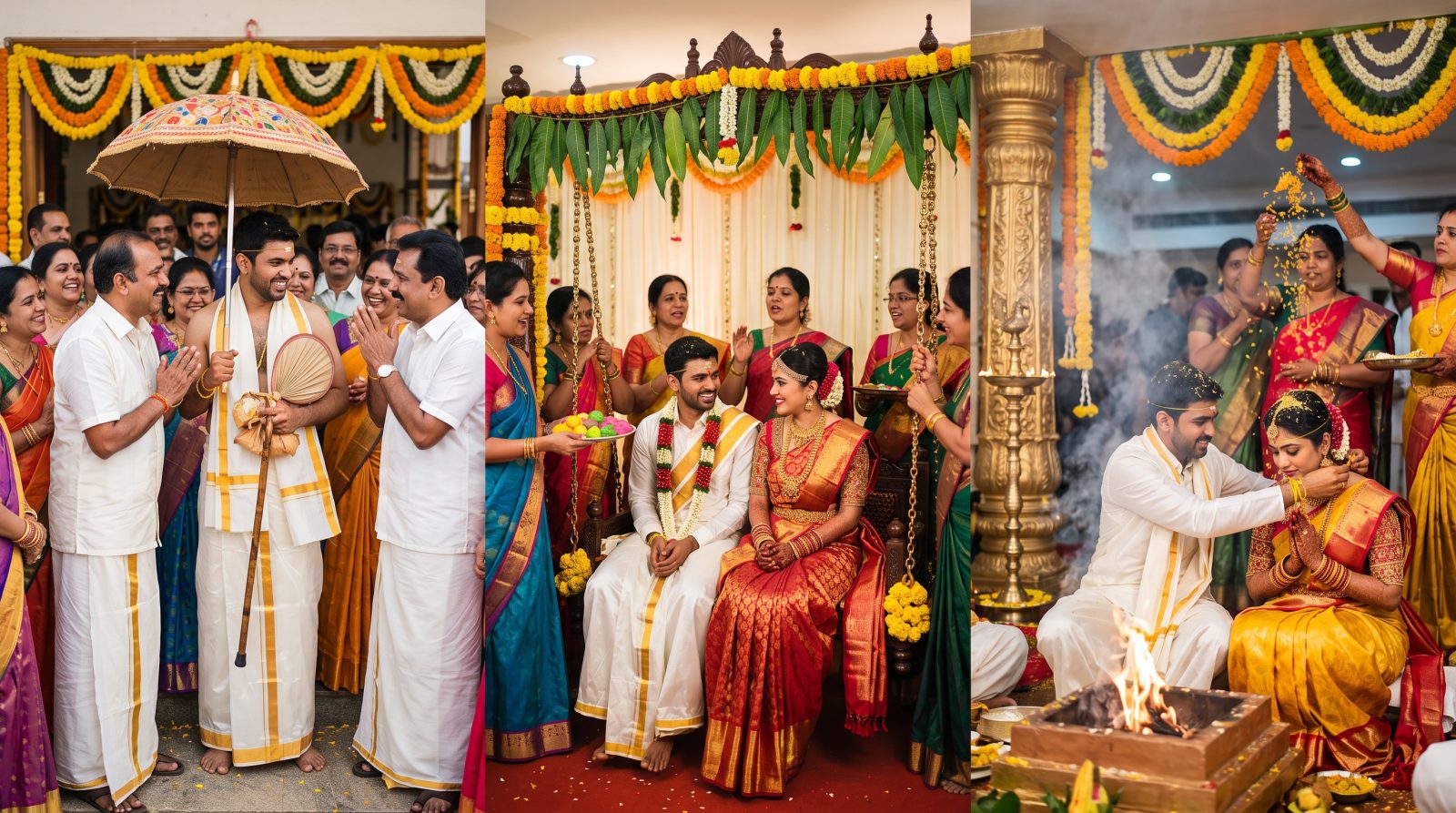
The core structure above holds across most Indian engagement ceremonies, but the details shift by community. Some traditions build the entire ceremony around a priest-led ritual with specific mantras before the ring exchange, while others treat the ring exchange as the whole event and skip formal religious elements entirely. South Indian ceremonies often place more weight on the blessing sequence, with elders individually blessing the couple one at a time rather than as a group, which can add fifteen to twenty minutes to the schedule that families sometimes forget to plan for.
How Much Buffer Time Should You Build In?
Weather and travel delays are the two most common reasons engagement ceremonies run behind schedule, particularly when guests are traveling from outside the city. Building in a thirty-minute buffer before the formal proposal segment gives latecomers time to arrive without holding up the entire program, and it's a far less awkward fix than restarting the introductions once the ring exchange has already begun.
Frequently Asked Questions
How long should an engagement ceremony last?
Most run between ninety minutes and two hours, including the meal. Ceremonies that stretch past three hours usually do so because of long speeches or a delayed start, not because the ritual itself takes that long.
Who pays for an engagement ceremony?
The hosting family typically covers the venue and catering, while the other family covers their own gifts and the ring they're presenting. Split arrangements are increasingly common and carry no etiquette penalty.
Is a ring exchange mandatory?
No. Some communities and families skip it entirely in favor of a simpler blessing ceremony, particularly when the wedding itself is happening soon after.
Can the groom's family host the engagement?
Yes, and it's becoming more common, especially when the bride's family is traveling from another city or when both families prefer to split hosting duties across the two ceremonies.
Getting the Details Right Matters More Than Getting Everything Perfect
Etiquette at an engagement ceremony isn't about following every rule to the letter, it's about making sure both families feel equally considered, from who speaks first to who's seated closest to the couple. Get the sequence right, communicate hosting duties early, and the rest of the day tends to take care of itself.