Engagement
Engagement Ceremony Timeline: What to Do Before, During, and After the Event
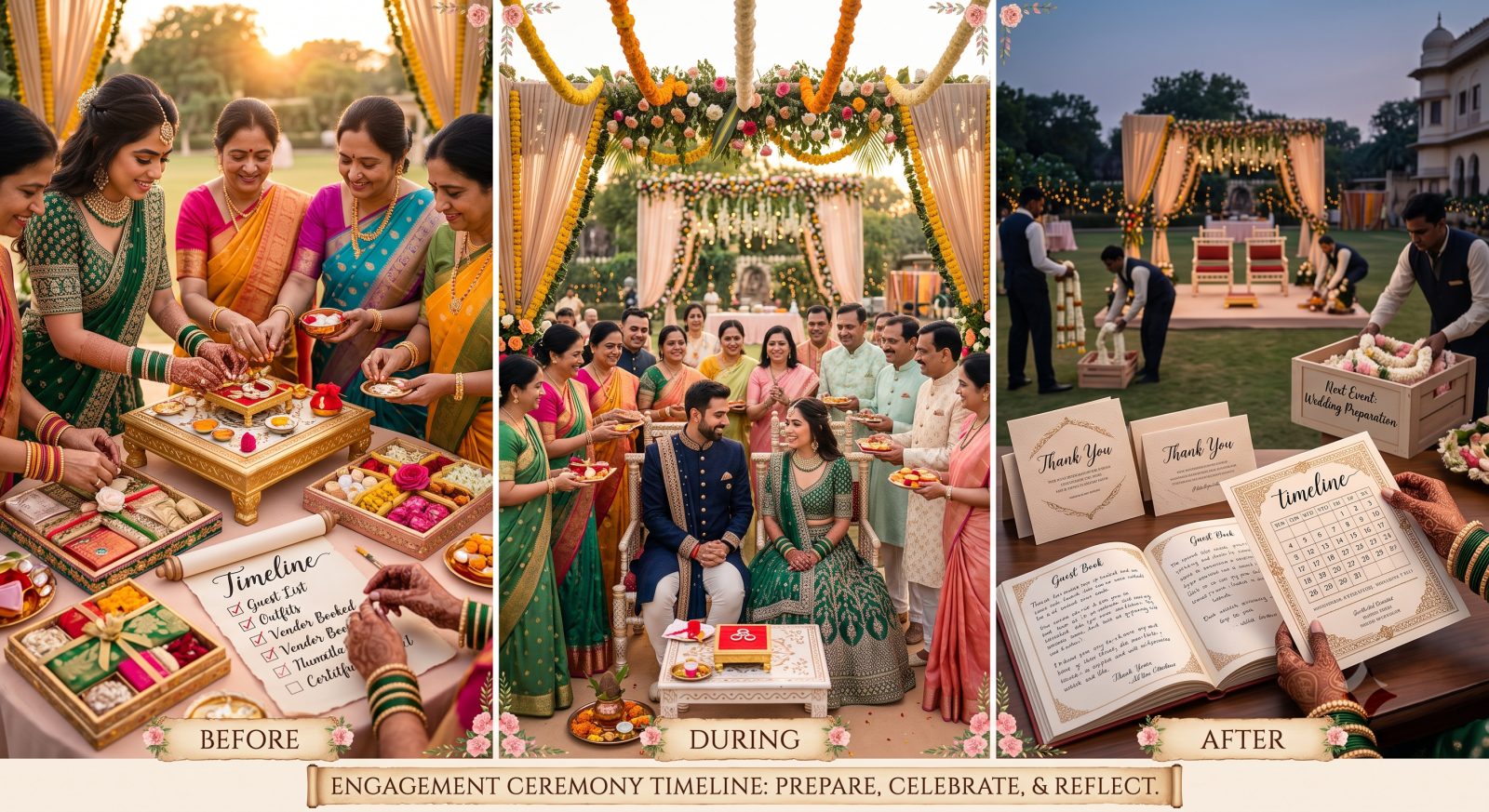
An engagement ceremony runs smoothly when the planning is split into three clear windows: 8 to 10 weeks before the event for venue, vendor, and guest-list decisions; a tightly scheduled 3 to 4-hour window on the ceremony day itself; and a 5 to 7-day wind-down afterward for payments, photo delivery, and thank-yous. Most delays on the actual day trace back to skipping one of these three windows, not to any single vendor going wrong.
The 8-Week Pre-Ceremony Checklist
Engagement ceremonies get compressed into a single afternoon, which means there is far less room to fix mistakes than there is for a two-day wedding. A staggered checklist keeps the pre-event phase from bunching up in the final week, and it also gives families time to coordinate travel, since engagement guest lists in Bangalore often include elders arriving from outside the city for just this one function.
- 8 weeks out: Confirm the venue, finalize the guest count (most Bangalore engagement ceremonies run 80 to 150 guests), and block the photographer and caterer.
- 6 weeks out: Send invitations, confirm the priest or purohit for the ritual portion, and finalize the decor theme and colour palette.
- 4 weeks out: Lock the menu, confirm transport for elders and out-of-town family, and place the order for the ring platter, garlands, and any custom stage backdrop.
- 2 weeks out: Do a final headcount, confirm seating layout with the venue coordinator, and reconfirm arrival times with every vendor in writing.
- 3 days out: Pick up outfits and jewellery, brief the family members who will host or make announcements, and share the run-of-show with the photographer and DJ or anchor.
Each of these milestones exists because the two ceremonies most couples confuse a compact engagement versus a full wedding actually need different lead times. An engagement has fewer moving parts, so an 8-week runway is usually enough, whereas a wedding needs 4 to 6 months.
How Far in Advance Should You Lock the Venue and Vendors?
In Bangalore, the wedding and engagement season runs roughly November through February, when weekend dates at popular halls in areas like Whitefield, JP Nagar, and Indiranagar can fill up 10 to 12 weeks ahead. Outside that window, 6 to 8 weeks is usually a safe cushion for both the venue and the core vendor team (photographer, caterer, decorator).
- Book the venue first, since the date and hall size determine everything else — guest count, catering minimums, and decor scale.
- Confirm the photographer and caterer within the same week as the venue; both tend to book out fastest for weekend slots.
- Leave the decorator and invitation printer for 2 to 3 weeks later, since design decisions (colour palette, floral choices) usually firm up only after the guest list is locked.
- Treat the priest or purohit's availability as a fixed constraint, not a flexible one many families work around a specific auspicious date and time (muhurtham), which can narrow venue availability faster than guest count does.
Engagement Day Timeline: Hour by Hour
A well-run engagement ceremony is really just three overlapping timelines the ritual, the hospitality, and the photography running in parallel rather than one after another. Here is what a typical 100-guest ceremony looks like on the day:
- 9:00–9:30 AM: Vendor setup — decor, stage, and audio checks completed before the first guests arrive.
- 9:30–10:00 AM: Family and the priest or purohit arrive; initial blessings and any pre-ritual formalities take place in a side room or lounge.
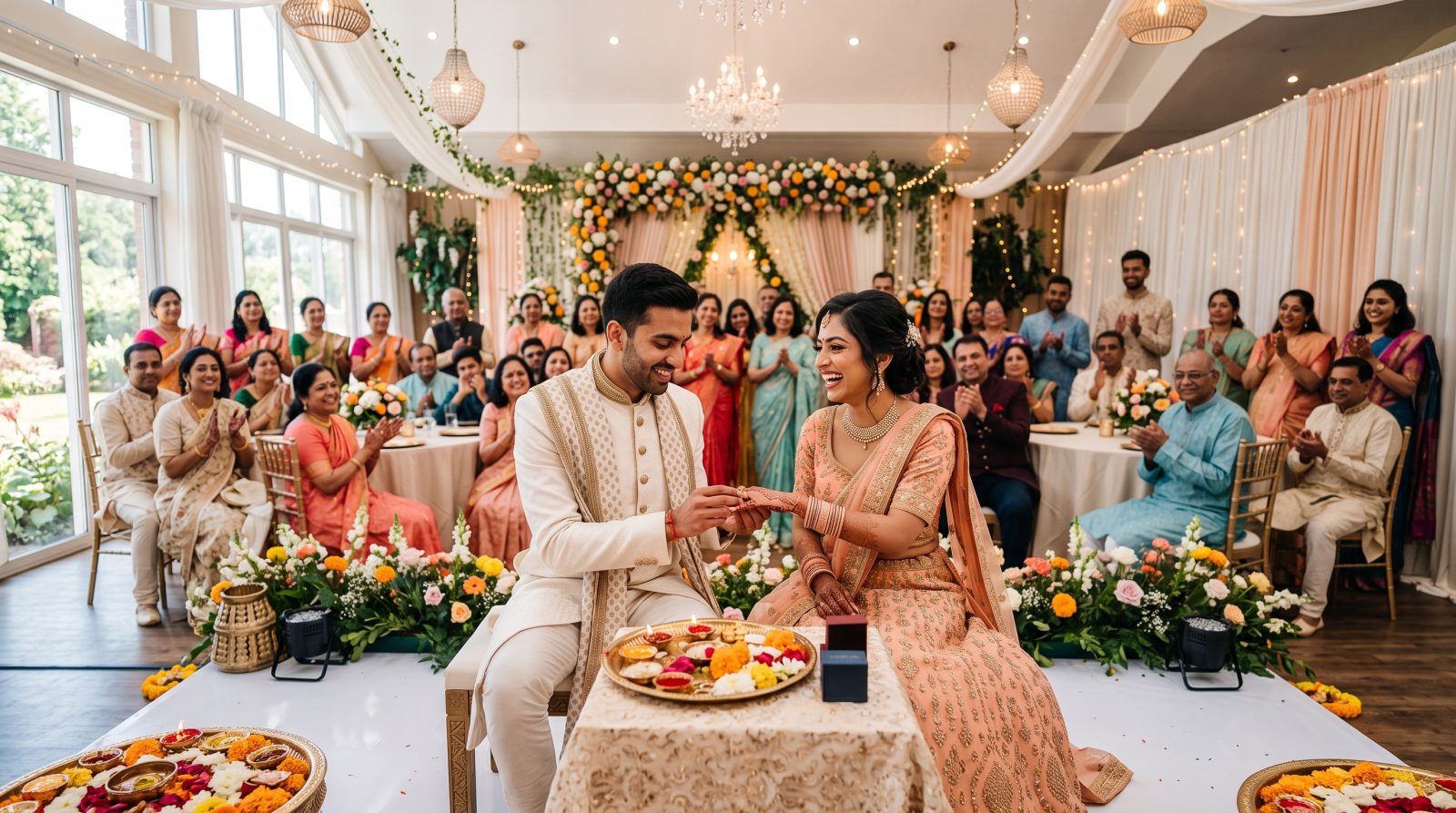
- 10:00–10:30 AM: The ring exchange itself — the ceremony's photographic centrepiece, usually staged on the main platform with both families seated close to the stage.
- 10:30–11:30 AM: Blessings, garlanding, and formal family photographs, while the hall transitions from ceremony mode to reception mode.
- 11:30 AM–1:00 PM: Lunch or high tea, with guests mingling as the couple moves table to table for photos.
- 1:00 PM onward: Farewell and vendor breakdown, typically wrapped within 45 minutes to an hour.
If you are still finalizing where to host this, most couples touring engagement venues in bangalore shortlist halls that physically separate the ring-stage zone from the dining area, because a 100-guest gathering moves through both spaces inside the same two-hour window, and that cross-traffic between the stage and the buffet line is the single most common cause of a delayed run-of-show. Venues that build in a buffer corridor or a second entrance for catering staff tend to keep the 10:00–11:30 AM block on schedule even when the guest count runs higher than planned.
Two details make or break this hour-by-hour flow: a written run-of-show shared with every vendor 48 hours ahead, and one point person (often a family member, not the couple) who can answer logistics questions so the couple isn't pulled away from the ritual itself.
What Rituals Happen During a Traditional Engagement Ceremony?
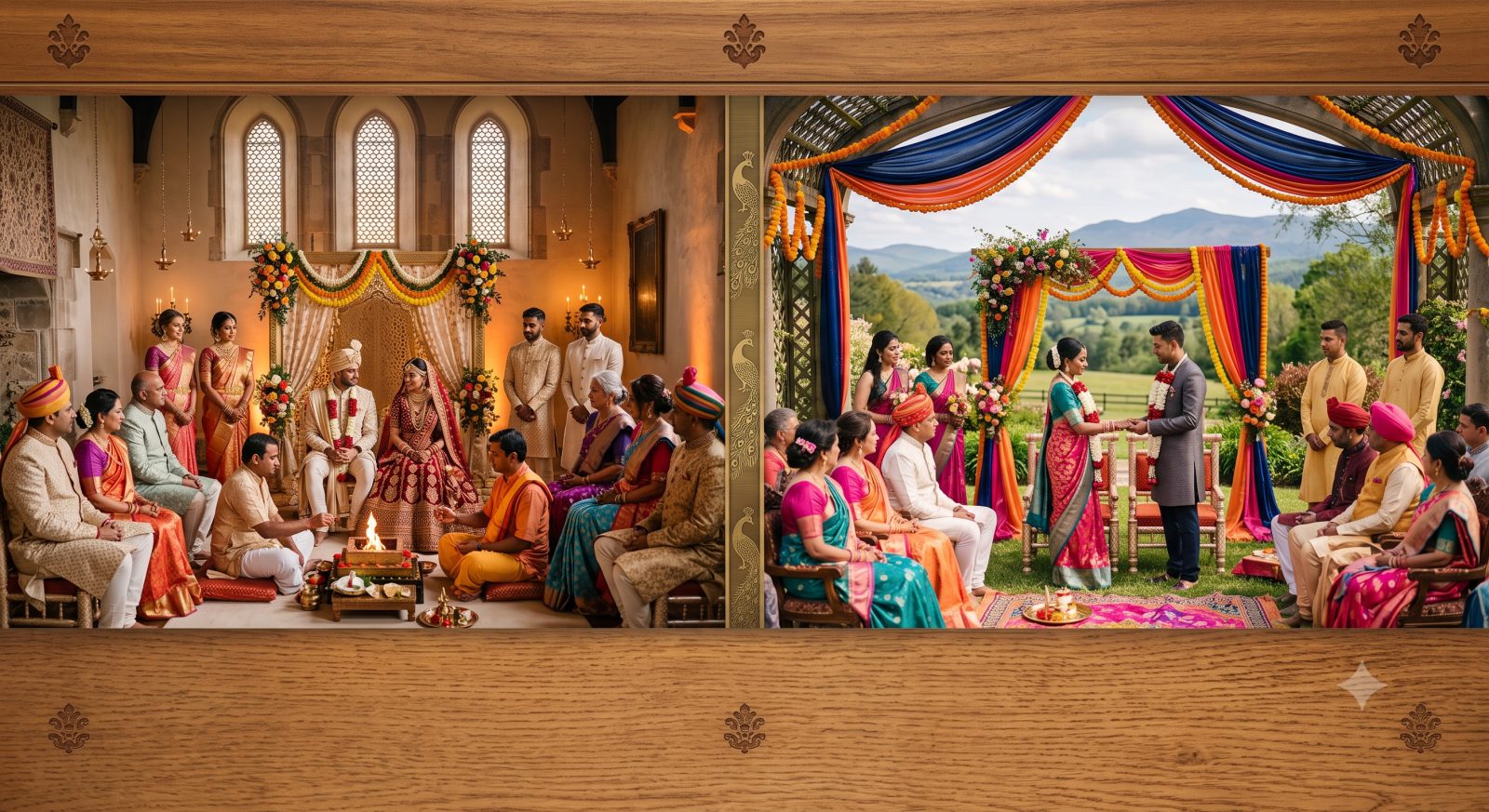
The rituals themselves vary by community, but most Bangalore engagement ceremonies draw from a shared set of moments:
- Roka or Sagai/Mangni (common in North Indian families): an initial, often smaller family gathering that formally announces the match before the larger ceremony.
- Nischayathartham or Nischitartham (common in South Indian, particularly Tamil, Telugu, and Kannada families): a formal declaration ceremony where family elders exchange consent, often accompanied by a puja.
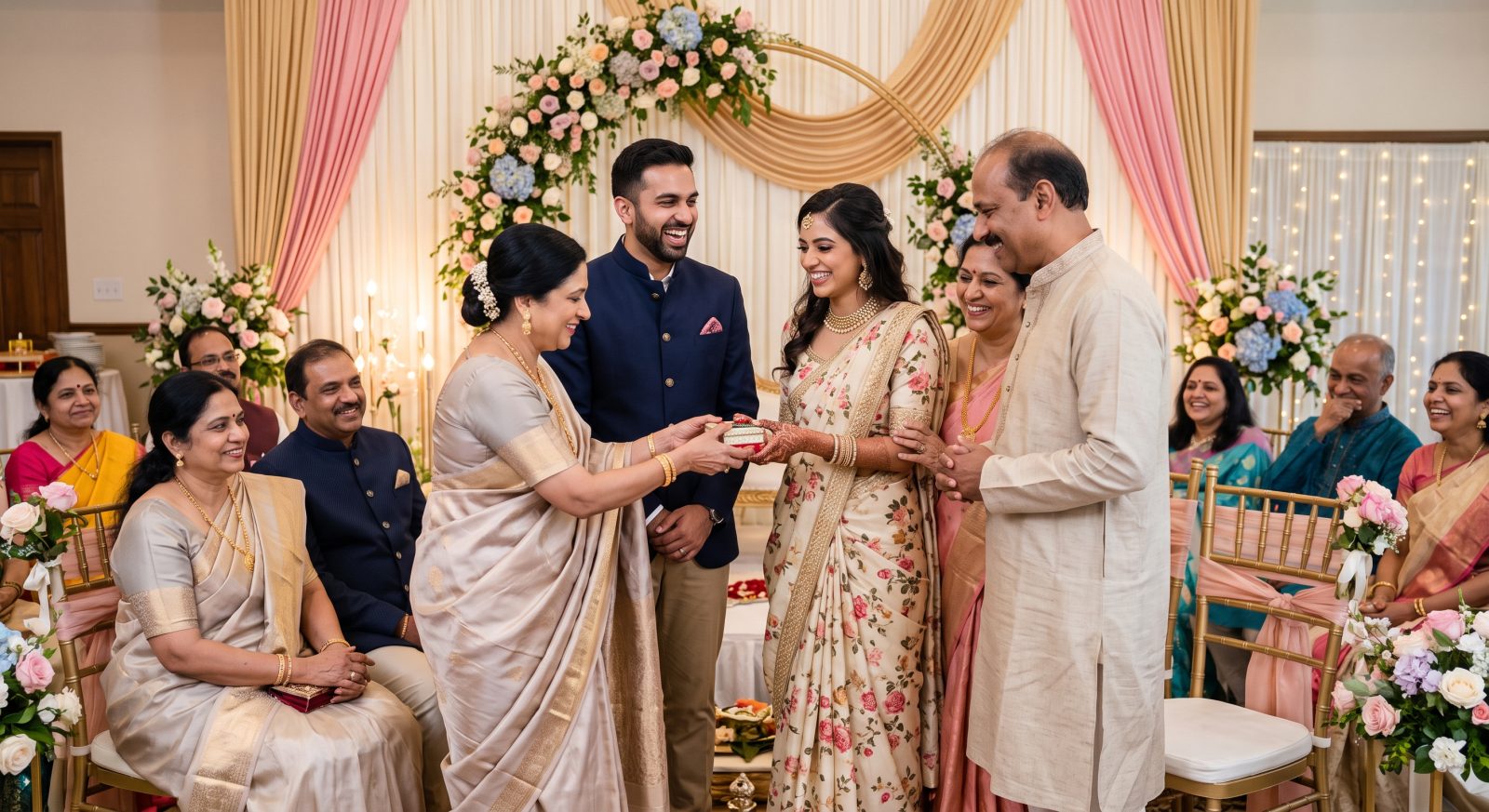
- Ring exchange: the moment most photography and video coverage is built around; typically the shortest ritual by duration but the longest by planning effort.
- Aarti and sweet distribution: closing the ritual portion and signalling the transition into the reception or lunch segment.
Because these rituals are often led by an elder or priest rather than a wedding planner, it helps to walk that person through the venue's stage layout and sound setup a day or two ahead, rather than on the morning of the event.
After the Ceremony: Closing Out Payments, Thank-Yous, and Loose Ends
The day after an engagement ceremony tends to be the most-forgotten part of the timeline, since attention shifts almost immediately to wedding planning. A short, dated checklist prevents anything from slipping:
- Within 48–72 hours: Clear any final balance payments to the venue, caterer, and decorator; most vendors flag late final payments as their top source of billing disputes.
- Within 7–10 days: Follow up on the venue's security deposit refund, and confirm any damages or shortages were noted and agreed on before guests left.
- Within 5–7 days: Send thank-you messages to close family and key guests, ideally alongside a photo or two from the day.
- Same day or next day: Return rented items — extra chairs, additional decor pieces, or borrowed serving equipment — so deposits aren't held up over a forgotten pickup.
What Should Couples Do With Photos, Videos, and Feedback After the Event?
Photography and video are usually the last deliverable to close out, and the timelines are worth setting expectations on early rather than after the event:
- Edited photo gallery: most photographers in Bangalore deliver a curated, edited set within 3 to 4 weeks.
- Full ceremony video or highlight reel: typically takes 6 to 8 weeks, longer if a cinematic edit with drone footage was booked.
- Social media highlights: couples who want to share sooner usually ask the photographer for 10 to 15 unedited or lightly edited shots within 48 hours specifically for this purpose.
- Vendor reviews and feedback: best given within 2 weeks of the event, while specifics are still fresh — this also tends to get faster responses if a vendor needs to resolve an outstanding issue.
Frequently Asked Questions
How many weeks before the engagement should the venue be booked?
For a weekend date between November and February, book 10 to 12 weeks ahead. Outside peak season, 6 to 8 weeks is usually enough.
What is the ideal duration for an engagement ceremony?
Most ceremonies run 3 to 4 hours total, including a 30-minute ritual block, an hour of photography and blessings, and 1.5 to 2 hours for lunch or reception.
Who should host or make announcements during the ceremony?
A family member or professional anchor, not the couple, so the couple can stay focused on the ritual and photography rather than logistics.
What should be done immediately after the ceremony ends?
Confirm final vendor payments within 72 hours and note any venue deposit or damage items before the team leaves, so nothing needs to be chased down later.
How far ahead should photography and videography be booked?
Alongside the venue, ideally in the same week, since photographers booking weekend dates in peak season fill up at the same pace as venues.