Banquet Hall
How to Choose the Perfect Banquet Hall for Your Event: A Complete Guide
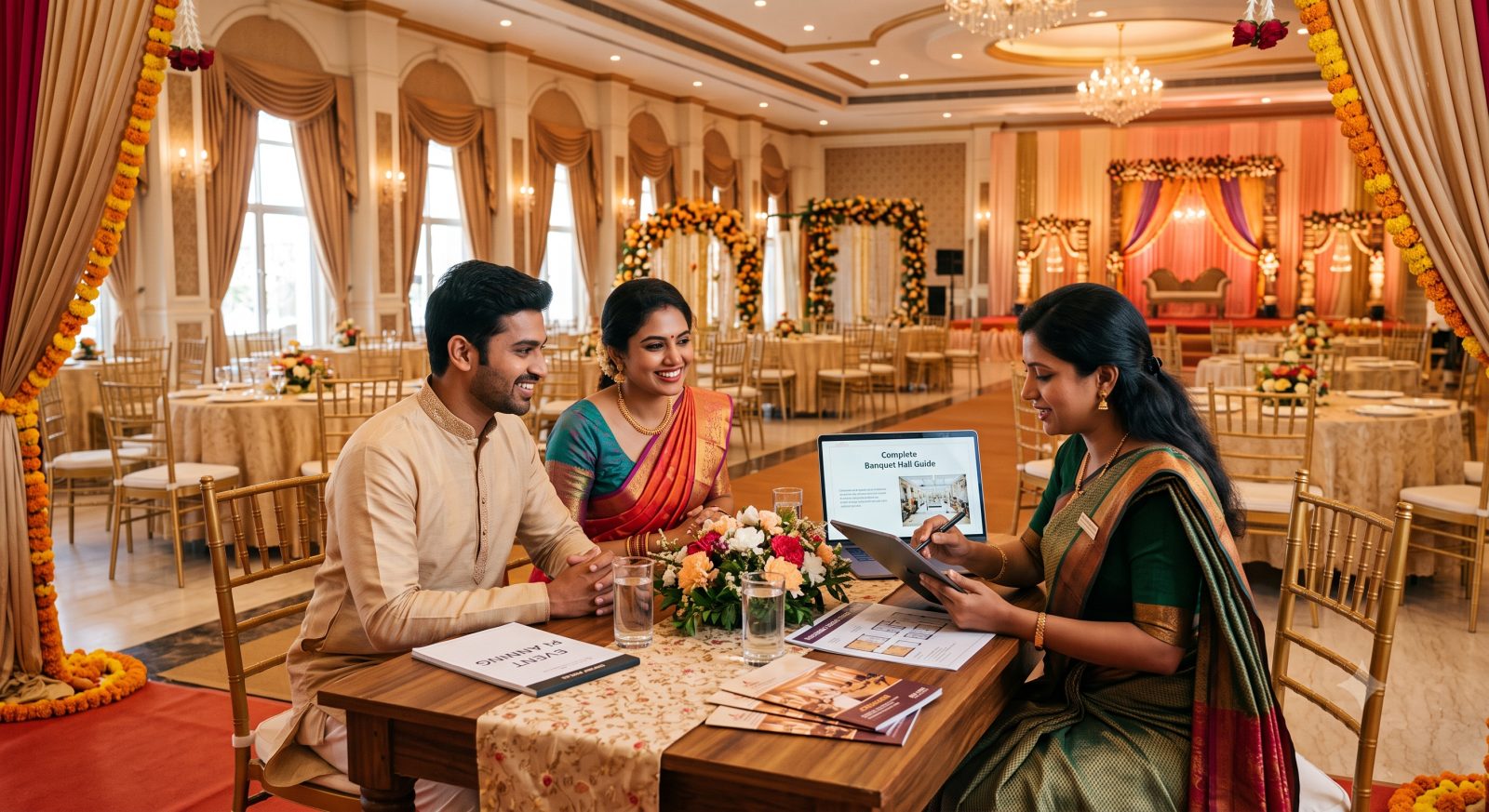
The right banquet hall can make an event feel effortless, while the wrong one turns even a well-planned celebration into a logistics headache. Choosing well comes down to five things: matching capacity to your actual guest count, confirming location and access work for most attendees, understanding exactly what's included in the price, checking the practical details during a site visit, and reading the contract closely before you sign. Get these right, and everything else decor, catering, timing falls into place around a venue that can actually support them.
Why the Venue Decision Shapes Everything Else
Most people start planning an event by picturing the décor or the menu. But the venue is the decision that constrains every other decision. A hall that's too small forces you to trim your guest list after invitations have gone out. A location that's hard to reach quietly shrinks your turnout. A hall with no backup power turns a monsoon evening into a crisis. Booking the venue first, before finalizing anything else, is the one sequencing choice that prevents the most common event-planning regrets.
This matters more for weddings, receptions, and engagement ceremonies than for smaller gatherings, simply because the stakes and the guest counts are higher. A birthday party can recover from a slightly cramped room. A wedding reception with 400 guests packed into a hall built for 250 cannot.
How Do You Determine the Right Guest Capacity?
Start with your confirmed guest list, not your invitation list the two are rarely the same number. A realistic rule of thumb is that 75–85% of invited guests typically attend Indian weddings and receptions, though this varies with the season, the day of the week, and how far guests are traveling. Once you have a realistic attendance estimate, add a buffer of roughly 10% for last-minute plus-ones, since Indian celebrations rarely turn away an uninvited relative at the door.
Capacity numbers quoted by venues are almost always theoretical maximums calculated on floor area alone. They rarely account for a stage, a buffet line, a DJ setup, or space for guests to move between rounds of a wedding ceremony. When a hall states it seats 500, ask specifically how that number changes with a stage and catering counters in place the real usable capacity is often 15–20% lower than the quoted figure.
Location and Accessibility: What Really Matters
A banquet hall's location determines who actually shows up. For events where guests are traveling from across a city, proximity to a ring road, a metro line, or a major arterial road matters more than proximity to any single neighborhood. Areas with good connectivity to both the airport and the main IT corridors tend to work well for events with a geographically spread-out guest list a common situation with corporate crowds and extended-family weddings alike.
If you're comparing several options across the city, it's worth looking at what's actually available among banquet halls in Bangalore before narrowing down to two or three finalists, since venues in the same price range can differ enormously in layout, parking capacity, and how well they handle back-to-back events on the same weekend. A shortlist built purely from social media recommendations often misses venues that are better suited to your specific guest count and budget.
Once you've narrowed the list, visit each shortlisted hall in person rather than deciding from photos alone. Photography angles and lighting can make a modest hall look grander than it is, and the reverse is also true some genuinely spacious venues photograph poorly.
What Should You Check During a Venue Site Visit?
A site visit answers questions that no brochure or website can. Walk the space at the same time of day your event will actually happen, if possible, so you can judge natural light, ambient noise, and how the room feels when it's not staged for a photo shoot.
Specific things to verify in person:
- Ceiling height and pillar placement — low ceilings or poorly placed pillars can block sightlines to a stage, which matters far more for a wedding or reception than it does for a seated dinner.
- Washroom count and condition — a frequently overlooked detail that directly affects guest experience, especially at events running four or more hours.
- Air conditioning capacity for a full house — a hall that feels comfortable empty can become uncomfortably warm once it's filled with several hundred guests, decorative lighting, and catering equipment.
- Backup power arrangements — ask specifically what happens during a power cut, not just whether backup power exists. Some venues run only lighting on backup, not air conditioning or sound systems.
- Existing decor restrictions — some halls restrict open flames, certain adhesives on walls, or specific types of floral installations. Confirm this before you finalize a décor vendor's plan.
Catering, Decor and In-House Services: Bundled or À La Carte?
Banquet halls generally fall into two models: those that require you to use their in-house catering and décor teams, and those that allow outside vendors for some or all services. Neither model is inherently better the right choice depends on how much control you want over your event and how much you trust the venue's internal teams.
In-house packages tend to be simpler to manage since one team is accountable for the whole event, and pricing is usually bundled into a single per-plate or per-event rate. Outside-vendor-friendly venues give you more flexibility on cuisine and décor style but require you to coordinate multiple vendors and confirm each one has venue access, load-in times, and any required permissions well in advance.
Ask what happens if you want a hybrid your own decorator but the venue's catering, for instance. Many halls allow this but charge an outside-vendor fee, which should be factored into your total budget comparison rather than treated as a separate line item.
How Much Should a Banquet Hall Cost?
Banquet hall pricing in Bangalore typically scales with three factors: guest capacity, whether catering is bundled, and the season wedding season months command a premium over off-peak months, sometimes by a meaningful percentage. Rather than anchoring to a fixed rupee figure that varies enormously by neighborhood and hall category, it's more useful to think in relative terms: a bundled per-plate package for a mid-range hall is generally more cost-predictable than a rental-plus-outside-vendor arrangement, though the latter can work out cheaper if you're comfortable managing multiple vendors yourself.
Always ask for a written, itemized quote rather than a verbal all-inclusive number. Line items to specifically request: hall rental, per-plate catering rate, any minimum guaranteed guest count, decoration allowances included versus billed separately, taxes, and any additional charges for extended hours beyond the standard booking window.
Parking, Power Backup and Logistics Most People Forget
Parking is one of the most underestimated factors in venue selection. A hall with insufficient on-site parking pushes guests onto surrounding streets, creates delays for elderly guests, and can generate complaints that overshadow an otherwise well-run event. Ask for the venue's actual car capacity, not a general assurance that "parking is available," and clarify whether valet service is included or arranged separately.
Power backup deserves the same specificity. Bangalore experiences periodic power interruptions, particularly during monsoon months, and a venue's backup capacity should be confirmed in writing including whether it covers air conditioning, since a backup generator that only powers lights during a summer evening event is a meaningfully different guarantee than full-load backup.
Contract Red Flags to Watch For
Before signing, read the cancellation and rescheduling policy closely this is the clause couples and event organizers most often regret not reading carefully. Confirm the refund percentage at each cancellation milestone, whether the date can be rescheduled without penalty, and what happens if the venue itself needs to cancel due to circumstances beyond its control.
Also confirm in writing: the final guest count deadline (the date by which you must lock in numbers for catering), any escalation clause for price changes between booking and event date, and what constitutes a breach of the outside-vendor policy if you're bringing in external decor or catering teams.
Quick Checklist Before You Sign
- Confirmed realistic guest capacity, not the venue's quoted maximum
- Site visit completed at a similar time of day to your actual event
- Backup power confirmed in writing, including AC coverage
- Written itemized quote covering rental, catering, taxes, and extra-hour charges
- Parking capacity and valet arrangement confirmed
- Cancellation, rescheduling, and final-headcount deadlines documented
Choosing a banquet hall is ultimately a matter of matching a venue's real capabilities not its marketing photos to your event's actual requirements. Take the time to visit in person, ask specific rather than general questions, and get every commitment in writing. The hall that looks best on paper is rarely the one that serves your event best on the day.